iPhone 17 vs iPhone Air
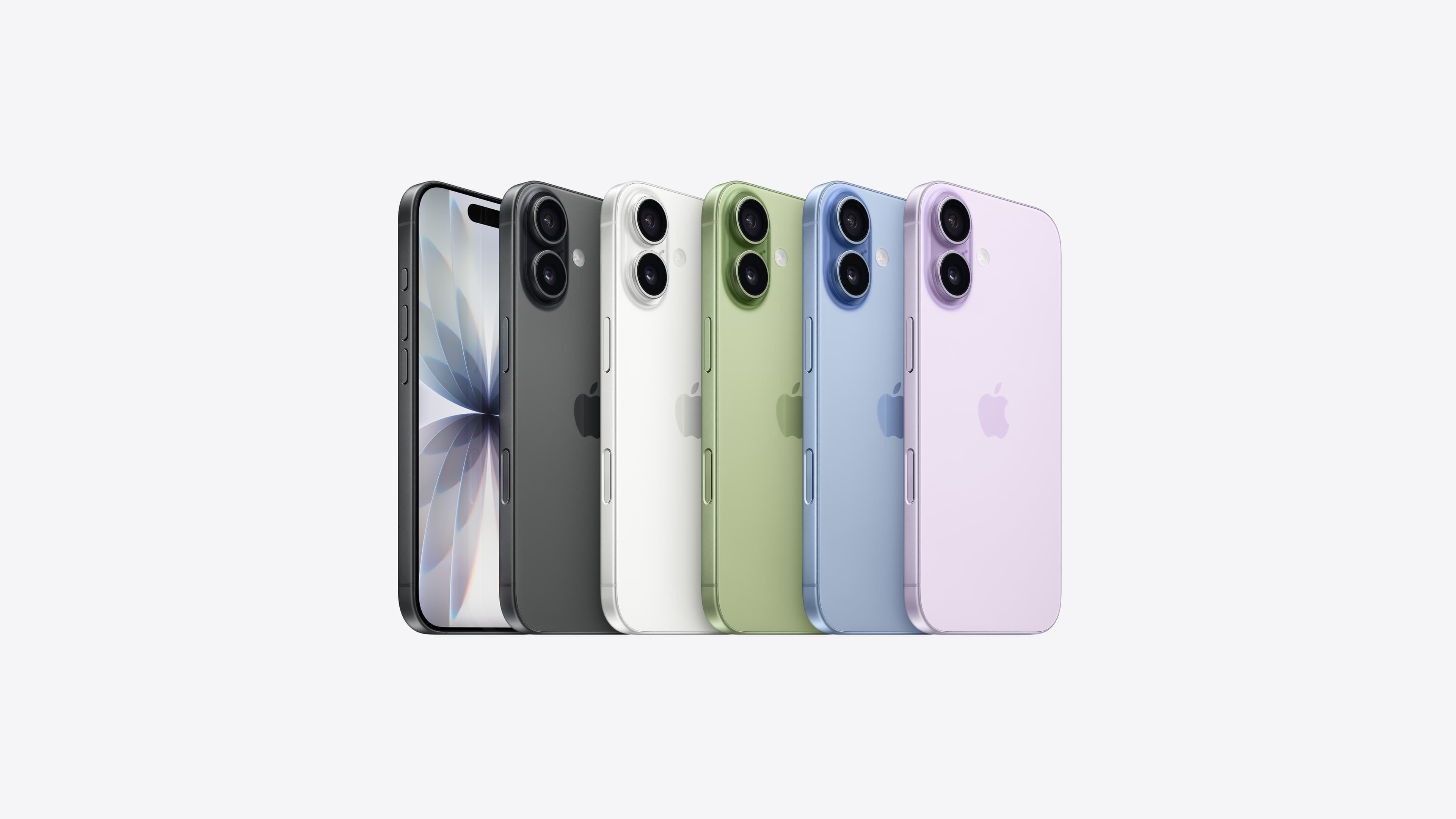
$170 separates a 177 g iPhone 17 with two rear lenses from a 165 g Air 5.64 mm thick with one — on the same panel technology, the same iOS and the same IP68 rating.
The short version
| Criterion | iPhone 17 | iPhone Air |
|---|---|---|
| Price | From $929 (256GB); $1,129 at 512GB. Apple also lists $899 and $1,099 with a $30 connectivity discount that requires carrier activation | From $1,099 (256GB); $1,299 at 512GB and $1,699 at 1TB |
| Display | 6.3-inch all-screen OLED Super Retina XDR, 2622 x 1206 (tall x wide) at 460 ppi; Dynamic Island, Always-On, ProMotion up to 120Hz; 3000 nits peak outdoor | 6.5-inch all-screen OLED Super Retina XDR, 2736 x 1260 (tall x wide) at 460 ppi; Dynamic Island, Always-On, ProMotion up to 120Hz; 3000 nits peak outdoor |
| Size and weight | 149.6 mm tall x 71.5 wide x 7.95 deep; 177 g | 156.2 mm tall x 74.7 wide x 5.64 deep; 165 g |
| Camera system | 48MP Dual Fusion system: 48MP main (26mm), 48MP Ultra Wide (13mm); 18MP Center Stage front camera | One rear lens: 48MP Fusion Main (26mm, f/1.6) with sensor-shift optical image stabilisation, which also enables a 12MP optical-quality 2x Telephoto (52mm, f/1.6); digital zoom up to 10x; 18MP Center Stage front camera |
| Battery life | Video playback up to 30 hours; streamed video up to 27 hours | Video playback up to 27 hours; streamed video up to 22 hours |
| Chip | A19 chip, 6-core CPU, 5-core GPU with Neural Accelerators | A19 Pro chip, 6-core CPU, 5-core GPU with Neural Accelerators |
| Storage | 256GB, 512GB | 256GB, 512GB, 1TB |
Which one fits
Consider iPhone 17 if
- You want an iPhone at $929 to start
- You want a phone that weighs 177 g
- You shoot wide and ultra-wide and rarely reach for a telephoto
Consider iPhone Air if
- You want a phone 5.64 mm thick that weighs 165 g
- You want a 6.5-inch display at 2736 x 1260
- One rear lens is enough for how you shoot
Main tradeoffs
- $929 to start, two rear lenses including a 48MP ultra wide, and 30 hours of quoted video playback177 g in a body 7.95 mm deep, a 6.3-inch screen rather than 6.5, and a 512GB ceiling
- 5.64 mm and 165 g, a 6.5-inch screen, the A19 Pro and a 1TB tier$1,099 to start, one rear lens with no ultra wide, and 27 hours of quoted video playback
At a glance
| Criterion | iPhone 17 | iPhone Air |
|---|---|---|
| Best for | People who want a current iPhone and will not use a telephoto lens often enough to pay for one | People for whom a 5.64 mm, 165 g phone is worth one rear lens and 27 hours of quoted video playback |
| Pricing | From $929 (256GB); $1,129 at 512GB. Apple also lists $899 and $1,099 with a $30 connectivity discount that requires carrier activation | From $1,099 (256GB); $1,299 at 512GB and $1,699 at 1TB |
| Platform | iOS 27 | iOS 27 |
| Key differentiator | Carries the same 6.3-inch display and IP68 rating as the iPhone 18 Pro for $300 less, with two rear cameras instead of three | A 5.64 mm body at 165 g, with a 6.5-inch Super Retina XDR display and a single 48MP rear lens |
| Category | Phones | Phones |
Key facts
| Fact | iPhone 17 | iPhone Air |
|---|---|---|
| Price | From $929 (256GB); $1,129 at 512GB. Apple also lists $899 and $1,099 with a $30 connectivity discount that requires carrier activation | From $1,099 (256GB); $1,299 at 512GB and $1,699 at 1TB |
| Display | 6.3-inch all-screen OLED Super Retina XDR, 2622 x 1206 (tall x wide) at 460 ppi; Dynamic Island, Always-On, ProMotion up to 120Hz; 3000 nits peak outdoor | 6.5-inch all-screen OLED Super Retina XDR, 2736 x 1260 (tall x wide) at 460 ppi; Dynamic Island, Always-On, ProMotion up to 120Hz; 3000 nits peak outdoor |
| Battery life | Video playback up to 30 hours; streamed video up to 27 hours | Video playback up to 27 hours; streamed video up to 22 hours |
| Chip | A19 chip, 6-core CPU, 5-core GPU with Neural Accelerators | A19 Pro chip, 6-core CPU, 5-core GPU with Neural Accelerators |
| Camera system | 48MP Dual Fusion system: 48MP main (26mm), 48MP Ultra Wide (13mm); 18MP Center Stage front camera | One rear lens: 48MP Fusion Main (26mm, f/1.6) with sensor-shift optical image stabilisation, which also enables a 12MP optical-quality 2x Telephoto (52mm, f/1.6); digital zoom up to 10x; 18MP Center Stage front camera |
| Operating system | iOS 27 | iOS 27 |
| Charging | Up to 50% in 20 minutes with a 40W adapter or higher; MagSafe wireless up to 25W | Up to 50% in 30 minutes with a 20W adapter or higher; MagSafe and Qi2 wireless up to 20W |
| Size and weight | 149.6 mm tall x 71.5 wide x 7.95 deep; 177 g | 156.2 mm tall x 74.7 wide x 5.64 deep; 165 g |
| Storage | 256GB, 512GB | 256GB, 512GB, 1TB |
| Water resistance | IP68, to a maximum depth of 6 metres for up to 30 minutes | IP68, to a maximum depth of 6 metres for up to 30 minutes, under IEC standard 60529 |
Two iPhones from the same generation that answer different questions. The iPhone 17 is the ordinary one: two rear lenses, a 7.95 mm body, $929. The Air is 5.64 mm and 165 g, with one rear lens and a shorter quoted battery figure, for $170 more. Same iOS, same panel technology, same IP68 rating.
Overview
These are not two steps on a ladder. Both run iOS 27, both use a Super Retina XDR panel at 460 ppi with Dynamic Island, Always-On and ProMotion to 120Hz, both are rated IP68 to six metres for thirty minutes. What separates them is what each one was built around. The iPhone 17 is a conventional phone with two rear lenses. The Air is built around a 5.64 mm body, and almost everything else about it follows from that decision.
Key differences
$929 against $1,099 at 256GB. A body 7.95 mm deep at 177 g against one 5.64 mm deep at 165 g. Two rear lenses against one. 6.3 inches at 2622 x 1206 against 6.5 at 2736 x 1260. Thirty hours of quoted video playback against twenty-seven. The A19 against the A19 Pro. And a storage ceiling of 512GB against 1TB.
Price
$929 for the iPhone 17 at 256GB and $1,099 for the Air, a difference of $170. Both figures are Apple's full retail prices. The iPhone 17 is also listed at $899, and its 512GB tier at $1,099, with a $30 connectivity discount that requires activating with a carrier — the Air has no equivalent discount, so comparing $899 against $1,099 would be comparing a carrier deal with a list price. At 512GB the iPhone 17 is $1,129 and the Air $1,299, and only the Air offers 1TB, at $1,699.
Size and weight
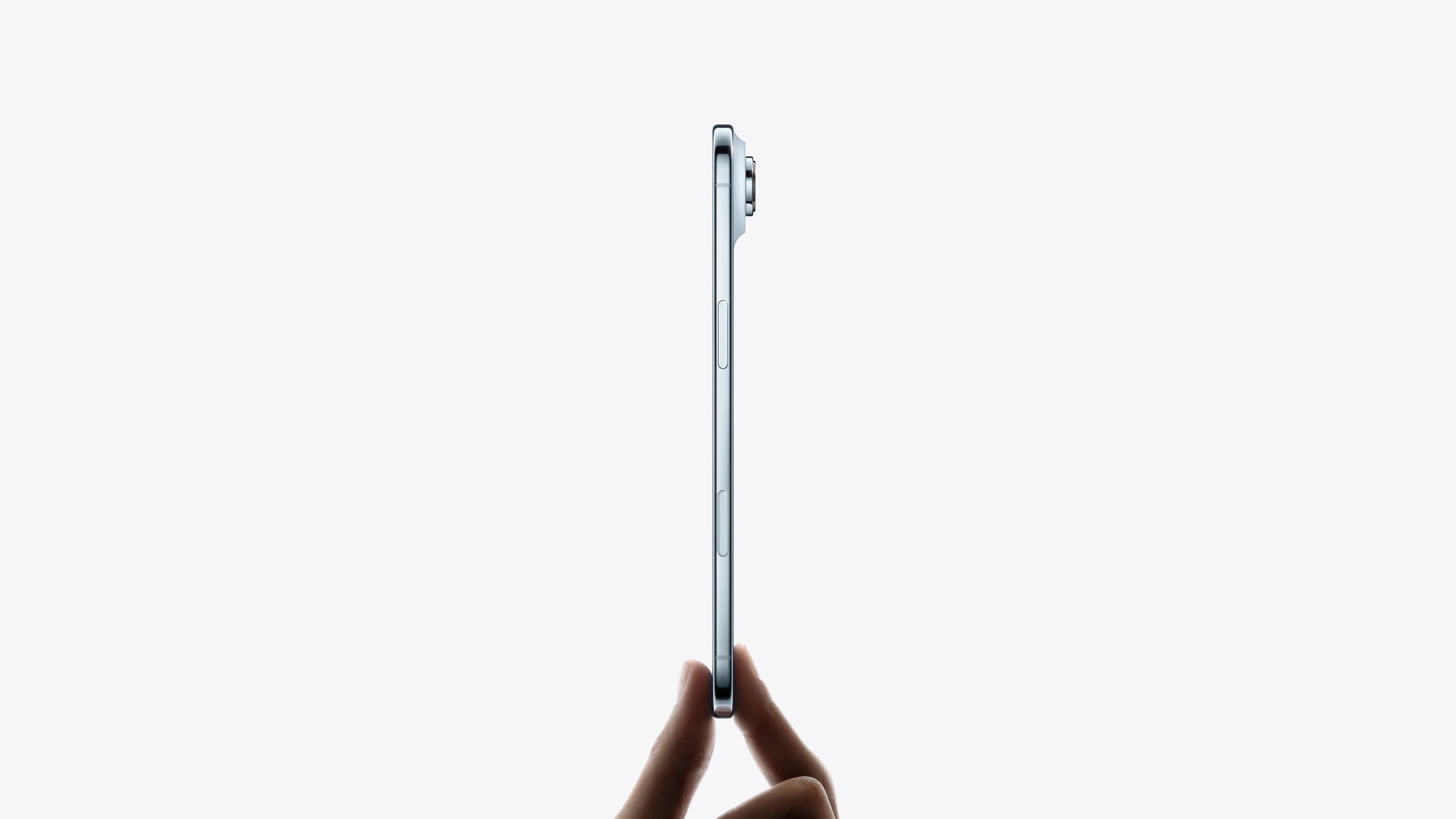
This is the axis the Air exists for, and it is not simply a smaller phone. The iPhone 17 is 149.6 mm tall, 71.5 wide and 7.95 deep, at 177 g. The Air is 156.2 tall, 74.7 wide and 5.64 deep, at 165 g. The Air is 2.31 mm thinner and 12 g lighter, and also 6.6 mm taller and 3.2 mm wider. It is the thinner, lighter phone and the larger footprint at the same time — which one of those your pocket and your hand notice is not something a specification table can answer for you.
Cameras
The iPhone 17 has two rear lenses: a 48MP main at 26 mm and a 48MP Ultra Wide at 13 mm. The Air has one, a 48MP Fusion Main at 26 mm, which also produces a 12MP 2x image at 52 mm by cropping the same sensor. So both reach 26 mm, only one reaches 13 mm, and the Air's 52 mm comes from a crop rather than a second lens. That is a difference in what the hardware can frame, not a verdict on the pictures: Apple publishes no comparable image testing for either, and a lens count is not image quality. If you use an ultra wide — for rooms, landscapes, anything you step back from and still cannot fit — only one of these two has one.
The display
Both are the same kind of panel: Super Retina XDR at 460 ppi, Dynamic Island, Always-On, ProMotion running adaptively to 120Hz, 3000 nits outdoors. The difference is size, 6.3 inches at 2622 x 1206 against 6.5 at 2736 x 1260. At identical pixel density the larger screen is more area rather than more detail, which is also why the Air is the taller and wider phone.
Battery
Apple quotes both on the same two measurements, so these numbers can be read against each other: video playback up to 30 hours on the iPhone 17 against 27 on the Air, and streamed video up to 27 hours against 22. Note that the iPhone 17's streamed figure and the Air's video figure are both 27 hours — the same number from two different tests, which is not a tie. Neither phone has a published typical-use figure, and these are Apple's own measurements under Apple's conditions, not a description of your day.
Chip and storage
The iPhone 17 runs the A19 and the Air the A19 Pro. Two different parts, and Apple publishes no benchmark that would order them, so there is nothing here to call faster. Storage is the clearer difference: the iPhone 17 comes in 256GB and 512GB, and the Air adds a 1TB tier above those.
Charging
Both reach 50%, under conditions that are not the same test. The iPhone 17 does it in 20 minutes with a 40W adapter or higher and charges wirelessly on MagSafe up to 25W. The Air does it in 30 minutes with a 20W adapter or higher, and supports MagSafe and Qi2 up to 20W. Reading "50%" against "50%" tells you nothing, because the adapters differ; what the two claims actually describe is a phone that fills faster given more power, and a phone that asks for less.
What is the same on both
iOS 27. The panel technology, down to the brightness and the refresh behaviour. The IP68 rating, to a maximum depth of six metres for up to thirty minutes. The 18MP Center Stage front camera. And the absence of any published commitment to a minimum number of years of updates — Apple states none for either phone, and two silences are not a shared promise.
Which one may fit you better
Consider the iPhone 17 if $929 is the number that works, if you use an ultra wide lens, or if a 7.95 mm body at 177 g is a shape you already know you like. Consider the Air if a 5.64 mm phone is something you want to carry, if 165 g in a jacket pocket is worth $170 and a lens to you, or if you want a 1TB tier the iPhone 17 does not offer.
Important considerations
The Air is thinner and lighter and also taller and wider, so "smaller" is the wrong word for it in both directions at once — measure both against something you own before deciding. The camera difference is structural rather than qualitative: one of these phones can frame an ultra-wide shot and the other cannot, which matters a great deal to some people and not at all to others. And neither phone comes with a published update window, so nothing here can tell you how long either will be supported.