Wearables
Amazfit Balance 3
A hybrid-training smartwatch from $369.99 with preloaded topographic and ski maps, a 3,000-nit sapphire display and up to 21 days of typical battery life.
Affiliate disclosure: we may earn a commission from eligible partner links. Read our affiliate disclosure
At a glance
- Best forHybrid and multisport training with offline navigation
- PricingFrom $369.99 steel, $449.99 titanium; no subscription required
- TrialNo device trial; optional Zepp subscriptions list 7- or 14-day trials
- PlatformiOS 17+ and Android 8+; call quick reply is Android-only
- Key differentiatorPreloaded base, contour and ski maps with auto-rerouting, a 3,000-nit sapphire display and up to 41 hours of accurate-mode GPS
Quick take
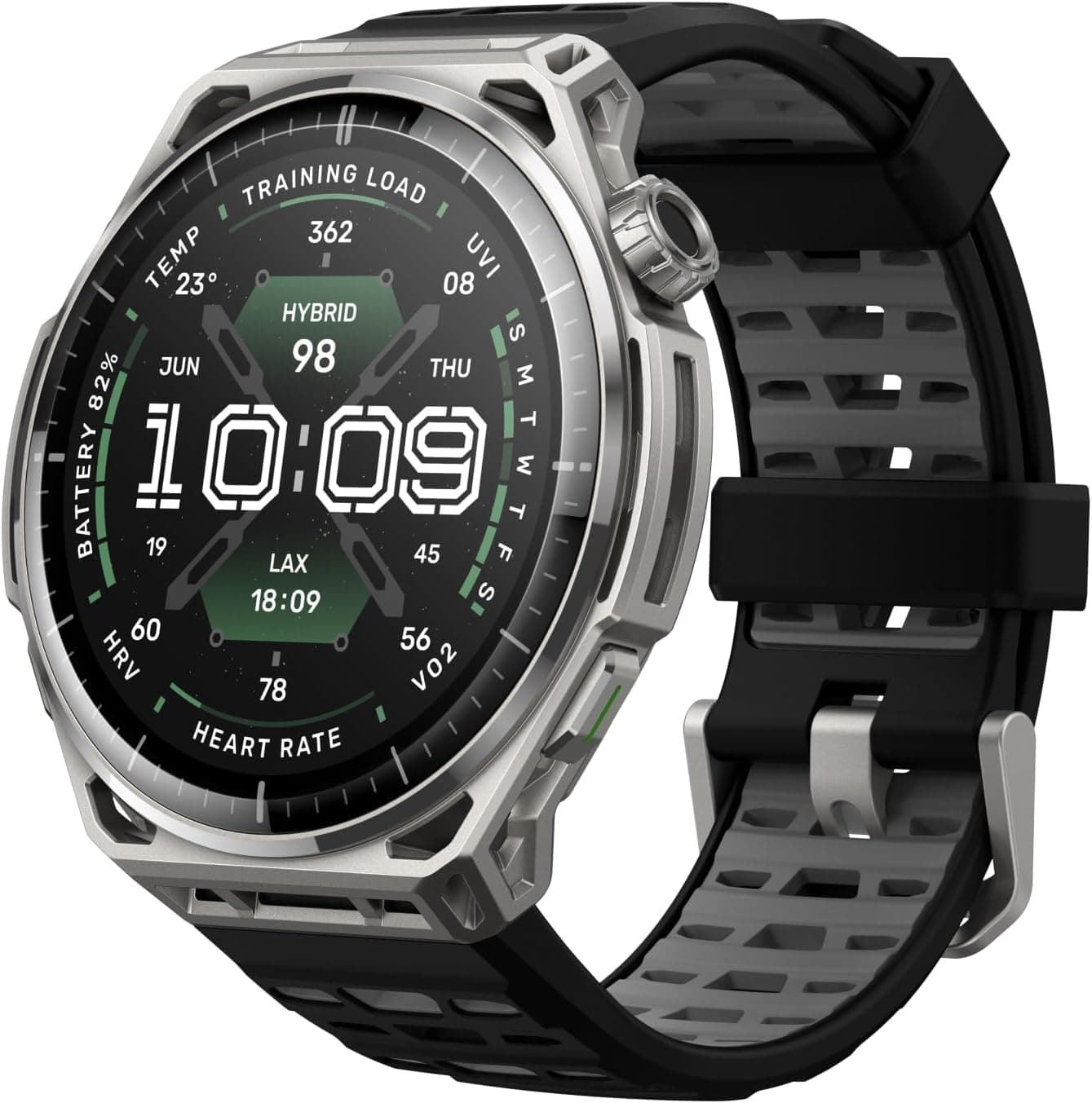
The Balance 3 moves Amazfit’s training watch upmarket: steel or Grade 5 titanium, a 3,000-nit sapphire display, four buttons, a flashlight, and base, contour and ski maps preloaded on 64 GB with auto-rerouting. Accurate-mode GPS rises to 41 hours while typical battery life stays at up to 21 days. The costs are size and reach — 51.4 mm and 55-62 g, and it now requires iOS 17 or Android 8 where the Balance 2 accepted iOS 15 and Android 7.
Good fit if
- You train across strength and endurance and want structured plans rather than step counts
- You want maps, route planning and auto-rerouting on the wrist, with no subscription
- You would rather charge a watch every two to three weeks than every night
- You carry either an iPhone or an Android phone and want the same watch to work with both
- You compete in HYROX or similar hybrid events and want a dedicated race mode
Consider another option if
- You want Wear OS, watchOS or Samsung apps and the services tied to those ecosystems
- You want a smaller or lighter watch — this is 51.4 mm and 55-62 g before the strap
- Your phone runs iOS 16 or Android 7: the Balance 3 requires iOS 17 or Android 8
- You want Amazfit’s flagship: the Balance Ultra adds titanium, 780 mAh and 30-day battery
Key facts
- PriceFrom $369.99 (steel); $449.99 (titanium)
- Display1.5" AMOLED, 480x480, sapphire glass, up to 3,000 nits
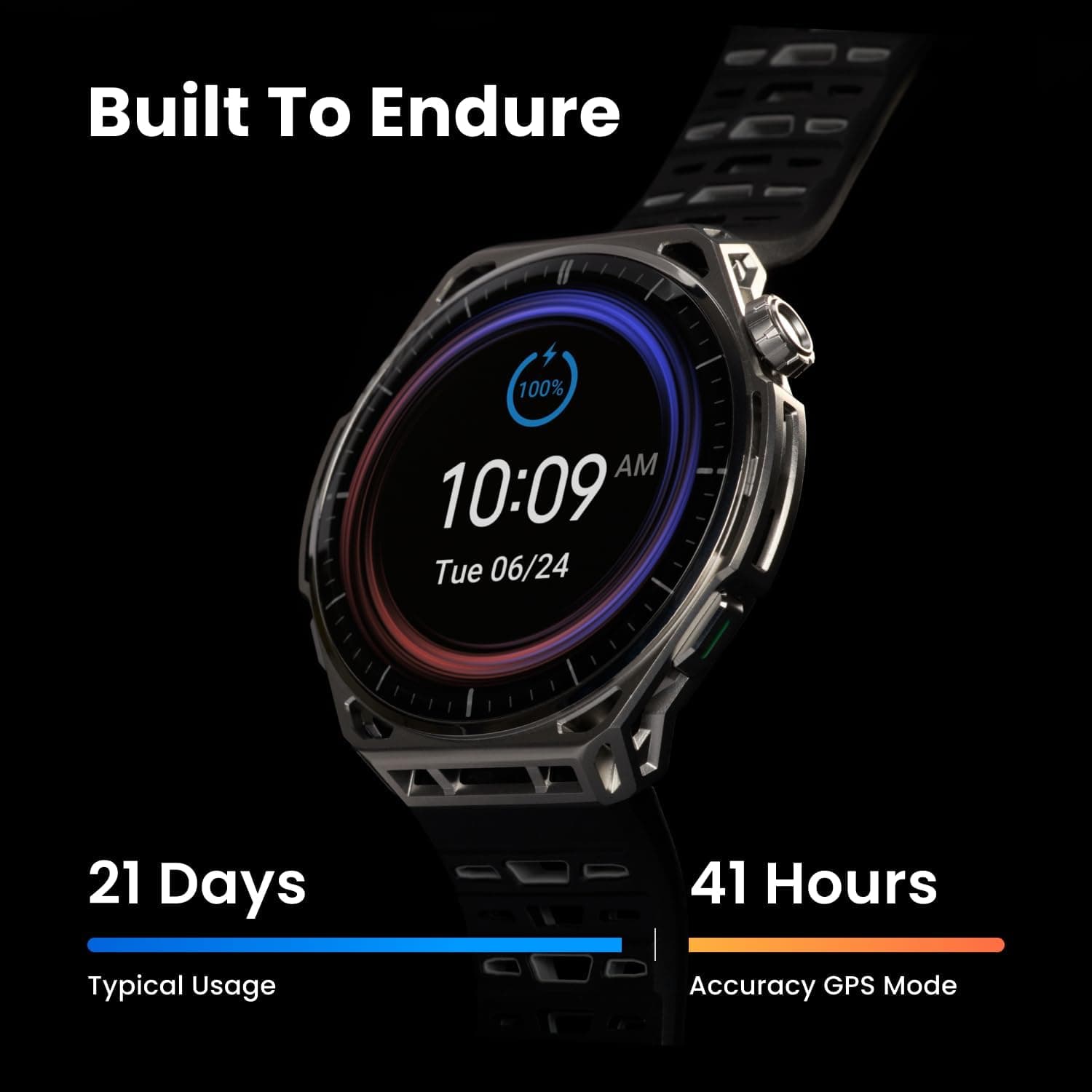
- Battery lifeUp to 21 days typical; 10 days heavy; 41 h accurate GPS
- PlatformiOS 17.0+ and Android 8.0+ via the Zepp App
- SubscriptionNone required for device features
- Water resistance10 ATM; certified for 45 m freediving
- Core focusHybrid training, recovery and offline navigation
- Case sizes51.4 mm, in steel or titanium
About Amazfit Balance 3
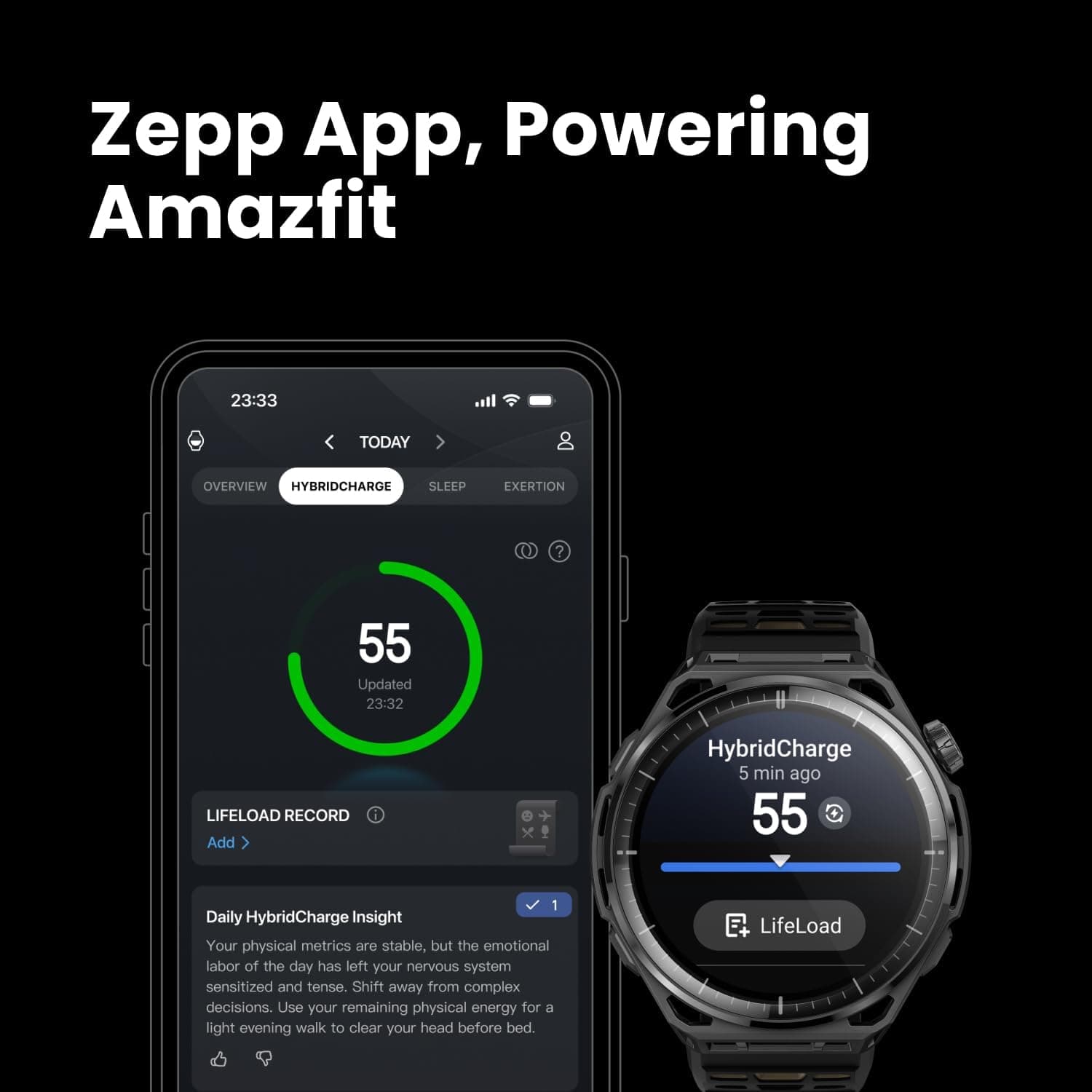
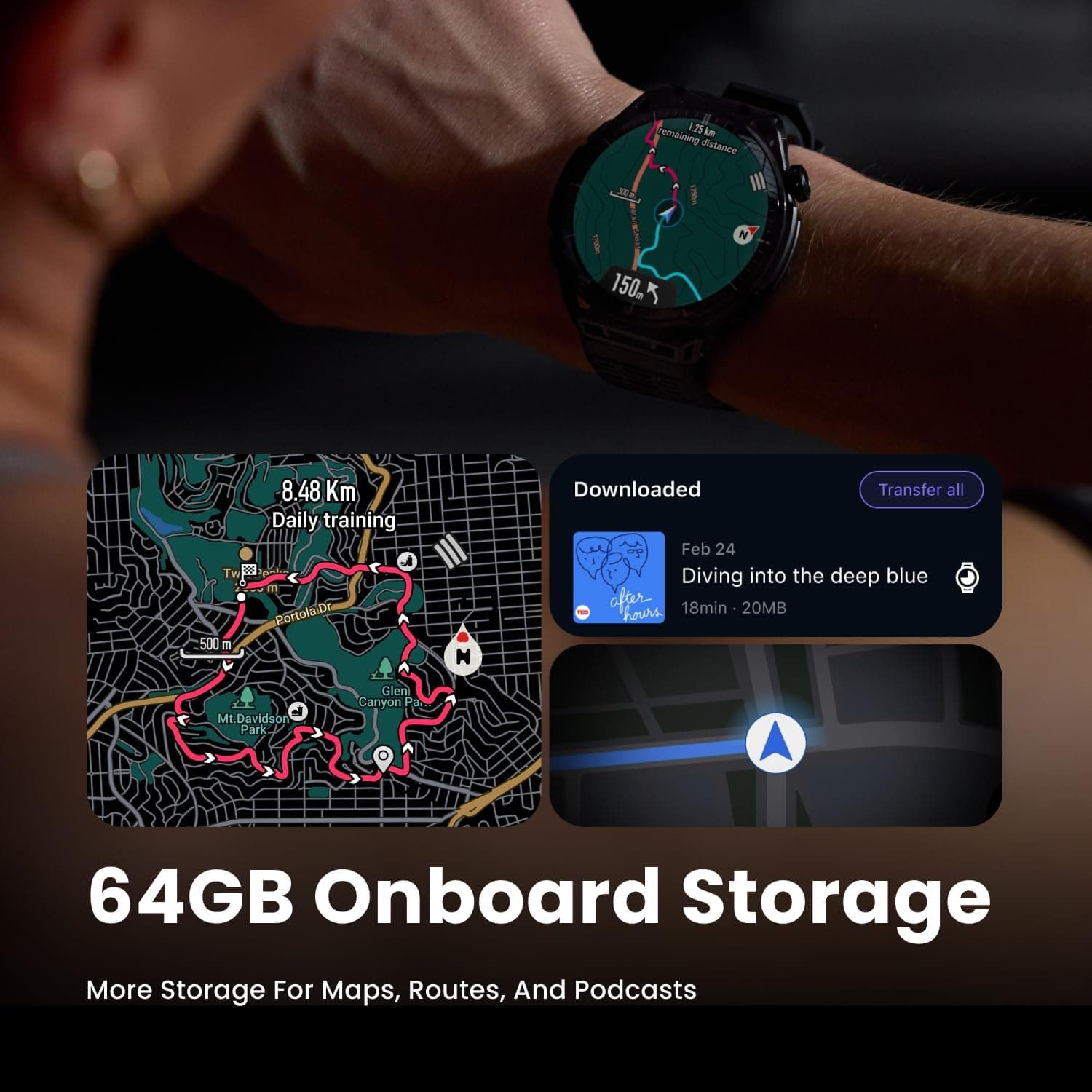
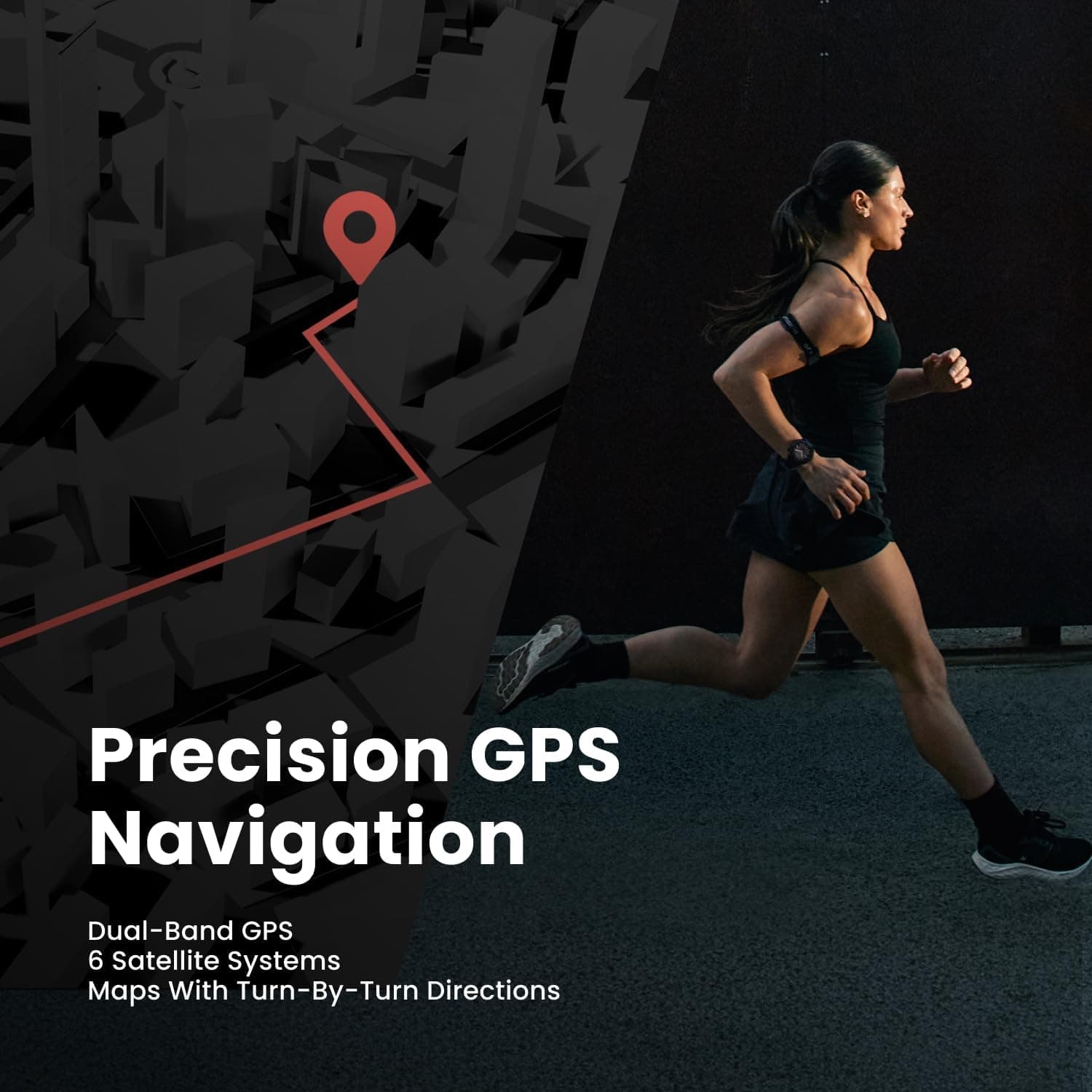
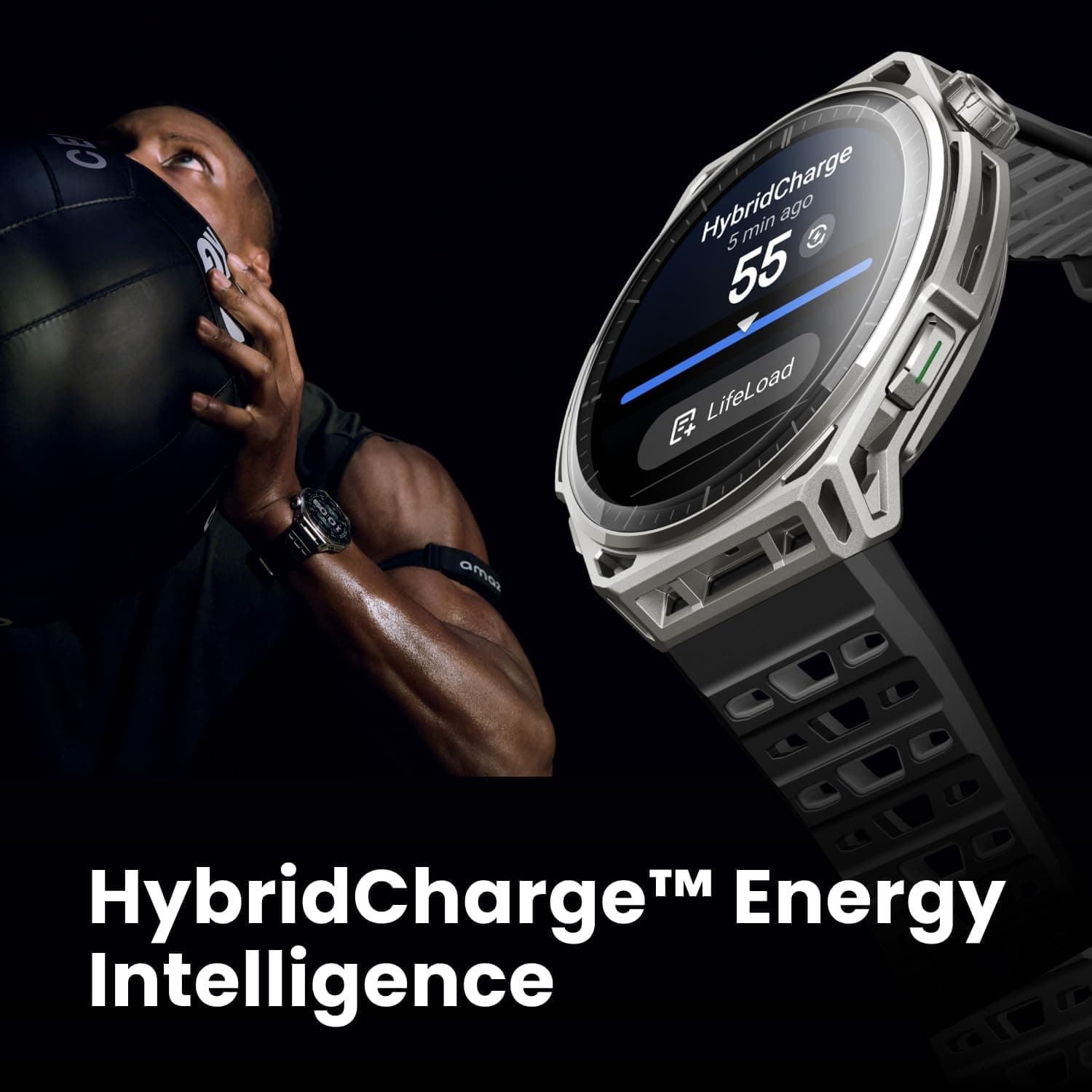
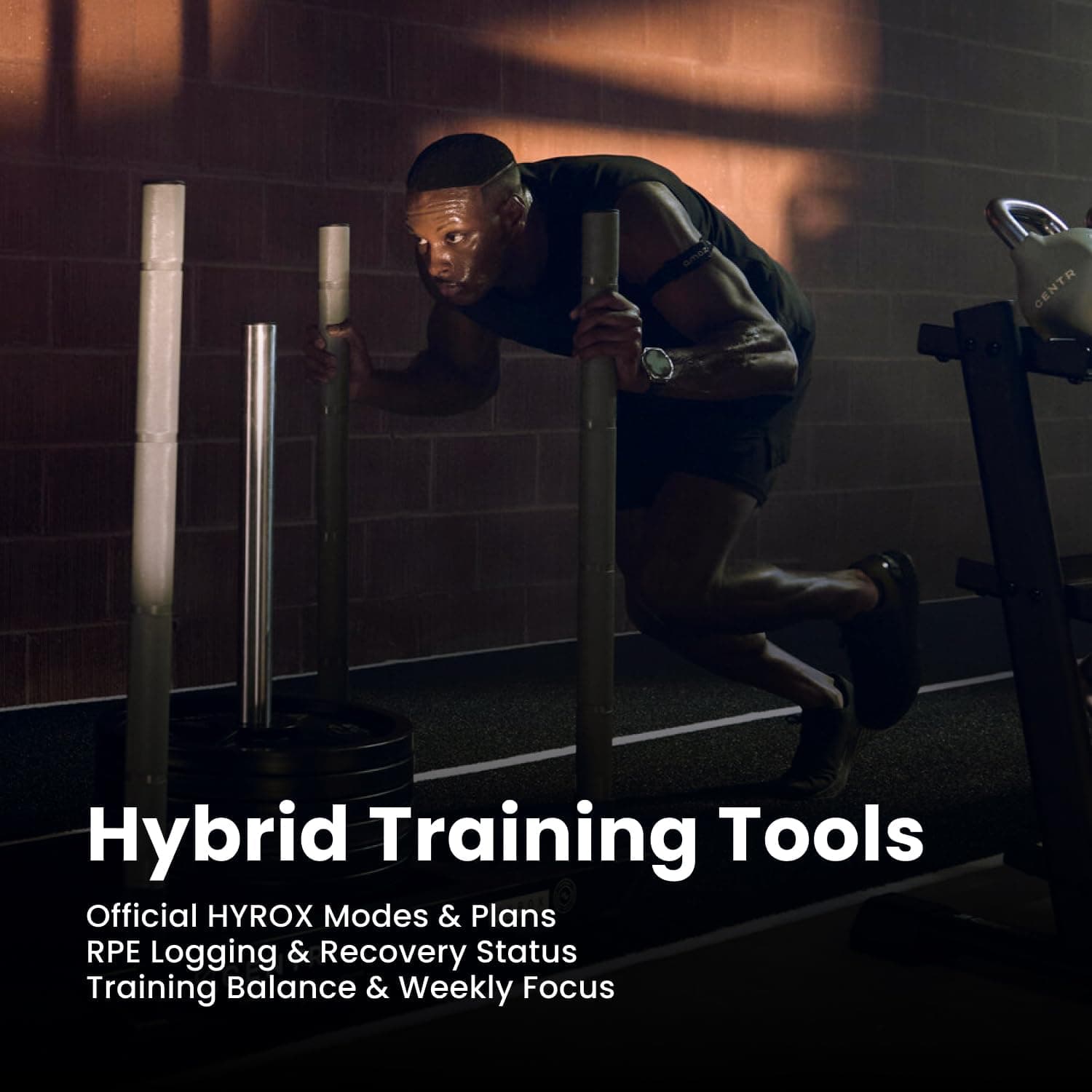
Overview The Balance 3 is Amazfit’s structured-training watch, sold in the United States from $369.99 in stainless steel and $449.99 in Grade 5 titanium. It is the successor to the Balance 2 and sits below the Balance Ultra in Amazfit’s own three-model range. The argument it makes is navigation and training depth at a price below the flagship smartwatches: a 3,000-nit sapphire display, base, contour and ski maps preloaded on 64 GB of storage, and up to 21 days of typical battery life. Everything below comes from Amazfit’s own product page, its Balance series page or the publisher’s own app listing. We have not worn this watch. Design and display Both versions share a 51.4 mm case and a 44.8 mm screen, 14.6 mm thick including the heart rate sensor or 12.5 mm without it. The stainless steel model weighs 62 g and the titanium 55 g, before the strap. That is a large, heavy watch by any measure, and it is the first thing to check against your own wrist. There are four buttons rather than the two on the Balance 2, and a flashlight with red and white light — the red setting is the one that preserves night vision. The 1.5-inch AMOLED panel runs 480x480 at 323 ppi and peaks at up to 3,000 nits, behind sapphire glass on both variants, including the cheaper one. Hybrid training Amazfit builds this watch around training that mixes strength and endurance rather than one discipline. In its own words, "With tools like Weekly Focus and Training Balance, it helps you prioritize effort, align your sessions, and train with greater consistency across strength, endurance, and recovery." The measured inputs behind that include Training Load, Training Stress Balance, lactate threshold, running power, ground contact time and RPE logging, with Zepp Coach generating running plans. The watch auto-recognises 25 strength movements and 8 sports movements, so a set does not have to be logged by hand. External sensors connect directly: heart rate monitors, power meters, cadence sensors and Stryd footpods. Recovery and energy intelligence HybridCharge is Amazfit’s name for the single view it builds out of BioCharge, LifeLoad and Training Load — energy available, demands outside training, and work accumulated. Recovery Status and the RestoreIQ algorithm sit alongside it. These are Amazfit’s own models with Amazfit’s own names, and they are not the same calculation as Garmin’s Training Readiness or Oura’s Readiness score; a number from one platform does not carry over to another. A one-tap measurement returns heart rate, stress, blood oxygen and breathing rate in about 45 seconds. GPS and navigation Positioning uses a dual-band circularly-polarised antenna across six satellite systems — GPS, GLONASS, Galileo, BeiDou, QZSS and NavIC. Dual-band is the mechanism behind a steadier fix among tall buildings and under tree cover. Amazfit also publishes a processing comparison against the Balance 2, describing map rendering as 2.5 times more efficient with a 12 times faster refresh; that is Amazfit’s measurement of its own hardware, quoted as such. Maps This is where the watch separates itself. Base maps, contour maps and ski resort maps come preloaded rather than downloaded, on 64 GB of storage. Navigation covers turn-by-turn directions, points of interest, route planning, round-trip route generation for when you want a loop rather than a destination, and automatic rerouting when you leave the route. Later updates added route preview and scale indicators in June 2026, an "Advance Up" navigation mode in July, map panning in August, and wrong-way detection in August. Golf is handled separately, with downloadable full-colour maps for more than 40,000 courses. None of this costs extra. Health tracking The sensor is Amazfit’s BioTracker 6.0 PPG array, five photodiodes and two LEDs, covering heart rate, blood oxygen, stress and skin temperature across 24 hours. Further metrics include VO2 Max, heart rate recovery, the PAI activity assessment and menstrual cycle tracking. Amazfit states plainly that this is not a medical device and that results are "provided for reference only", and it notes that monitoring accuracy can be affected by movement and by environmental and physical characteristics. Read the numbers as wellness estimates, which is what they are. Sports and HYROX Amazfit lists more than 180 sports modes. HYROX support is specific rather than nominal: a race mode, training plans, race simulations, virtual pace, and post-race analysis broken down by pacing, by station and by ranking. The September 2026 update added HYROX analysis using the Helio Strap Pro accessory. Syncing covers Strava, TrainingPeaks, Intervals.ICU, Apple Health, Google Fit and Runna — worth checking against wherever your history already lives. Golf and diving Golf course maps cover more than 40,000 courses worldwide in full colour, downloaded as needed. Diving is certified rather than implied, and the two water ratings answer different questions. The 10 ATM rating is a static-pressure test, which Amazfit explains as withstanding "pressure equivalent to 100 meters or 328 feet of static water depth". Separately, the watch is certified for freediving to 45 m and for recreational scuba, and the July 2026 update added automatic dive detection. Battery The 658 mAh battery is rated at up to 21 days of typical use and up to 10 days of heavy use, up to 7 days with the always-on display enabled, and GPS is quoted on its own: up to 41 hours in accuracy mode and up to 84 hours in power-saving mode. Amazfit attaches test scenarios to the headline figures in its footnotes and states that battery life "may vary according to settings, operation conditions and other factors". The always-on display figure is the one to weigh, because it is the setting most people turn on first and it costs two thirds of the headline number. Zepp OS and smart features Amazfit does not publish a Zepp OS version number for this model anywhere on the product page, so we do not state one. What is documented: Zepp Flow 2.0 for voice commands and notes, Bluetooth calls through the microphone and speaker, membership and shortcut cards, event reminders, to-do lists, alarms, weather, sedentary alerts, Do Not Disturb, and morning and evening briefings. Features continue to arrive by update — six releases between June and September 2026 — which also means a unit that has not been updated will not match the current description. Phone compatibility The Balance 3 works with iOS 17.0 and above and Android 8.0 and above through the Zepp App. Both requirements are higher than the Balance 2’s iOS 15 and Android 7, so an older phone that paired with the previous model may not pair with this one. The asymmetry Amazfit documents is narrow and specific: call quick reply is listed as Android only. It does not describe a general message-reply feature for either platform on this page, so we do not claim one. Subscription Nothing on the watch requires a subscription. Amazfit’s own app listing states that the core Zepp App experience is free, including viewing device data, software updates and importing maps — so the mapping that is a paid tier on some rival platforms is not one here. Optional paid services exist inside the app, including Zepp Aura Premium and a Zepp Fitness plan, and watch faces are sold individually. None is needed to use the hardware. Balance 2 vs Balance 3 context Against the Balance 2, this model raises peak brightness from 2,000 to 3,000 nits, accurate-mode GPS from 33 to 41 hours, power-saving GPS from 67 to 84 hours, and the case material from aluminium to steel or titanium. It adds a flashlight, two more buttons, preloaded contour and ski maps, round-trip routing, auto-rerouting, skin temperature sensing, lactate threshold and running power. Typical battery life is unchanged at up to 21 days, and the 10 ATM rating, 45 m diving certification and 180-plus modes carry over. Three things move the other way: the case grows from 47.4 mm to 51.4 mm and the weight from 43 g to 55-62 g, Amazfit’s comparison table lists two speakers on the Balance 2 against one here, and the minimum phone requirements rise. The Balance 2 remains on sale at $299.99, so this is a real choice rather than a replacement. Who it may suit Someone training across strength and endurance who wants maps, routing and recovery metrics without a subscription, and who would rather charge a watch every few weeks than every night. The HYROX support is detailed enough to matter if that is the event you train for. The large case suits a larger wrist, and the titanium version exists mainly to take 7 g off it. Important considerations Size is the main caveat: 51.4 mm across and 55-62 g before the strap puts this at the top end of what most wrists carry comfortably, and no software feature compensates for a watch that does not fit. The raised phone requirements are the second, and they are easy to miss when upgrading from an older Amazfit. Two smaller points. The box contains a magnetic charging head but no USB-C cable, which Amazfit explains as a sustainability decision — you will need a cable you already own. And Amazfit does not publish a charging time for this model, where it does publish one for the Balance 2; we have left that figure out rather than borrowing it.
Gallery
Alternatives
Apple Watch Series 12
Apple's flagship smartwatch from $399: a full watch with apps and notifications, plus a redesigned health sensing system, readiness and sleep scores.
View productApple Watch Ultra 4
Apple's rugged 49mm titanium smartwatch from $799, with up to 50 hours of battery, dual-frequency GPS, scuba to 40m and satellite messaging.
View productGarmin Venu 4
A fitness and wellness smartwatch from $549.99 with an AMOLED display, multi-band GPS and up to 12 days of battery, working with both iPhone and Android.
View product