Google Pixel 10 Pro Fold vs Samsung Galaxy Z Fold7
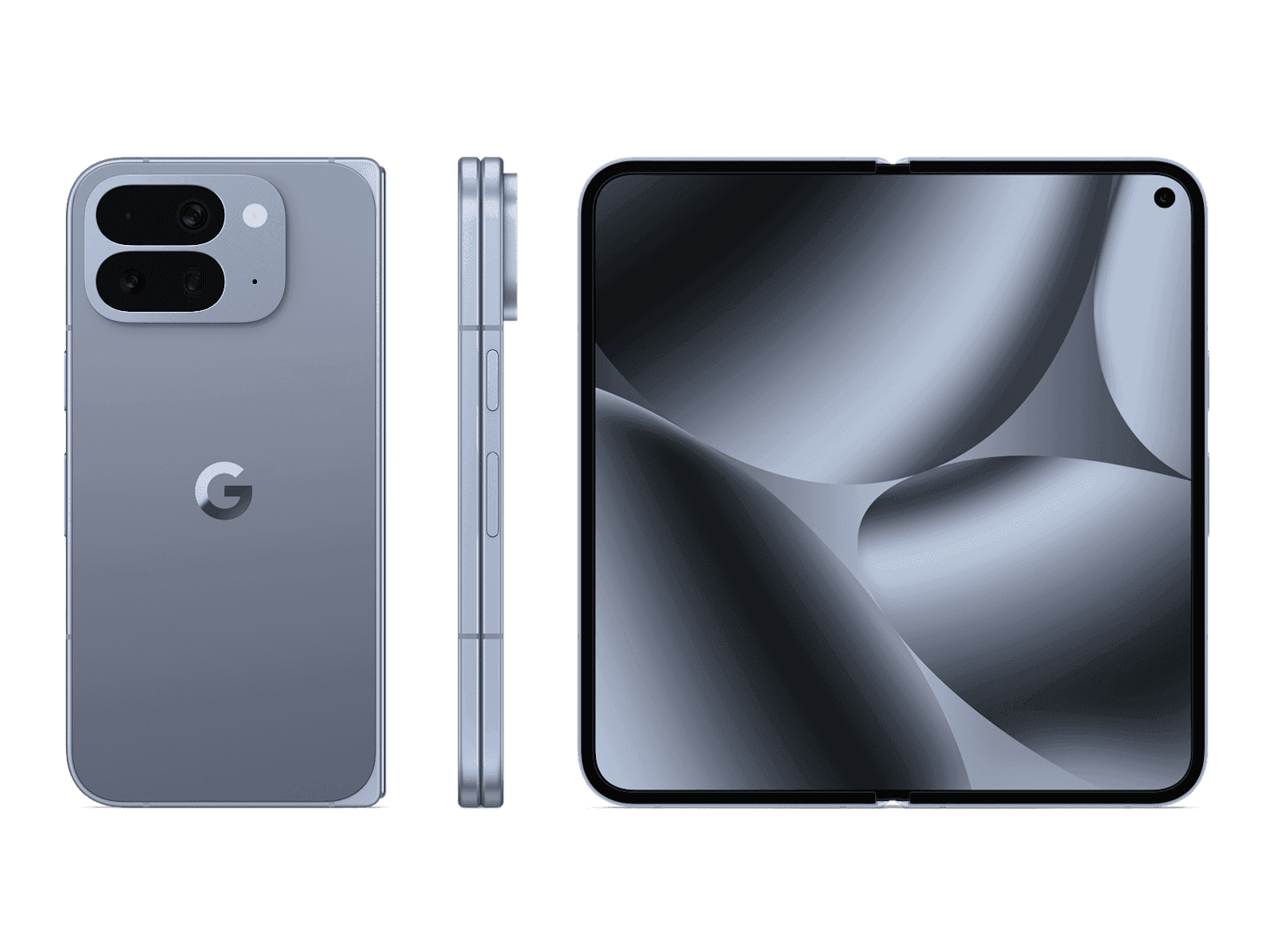
Two book-style Android foldables $200 apart: a 5x telephoto and a 5,015 mAh typical cell at $1,799, or a 215 g body 8.9 mm thick folded that Samsung rates IP48 rather than IP68.
The short version
| Criterion | Google Pixel 10 Pro Fold | Samsung Galaxy Z Fold7 |
|---|---|---|
| Price | From $1,799 | From $1,999.99 (256GB); $2,199.99 at 512GB; $2,499.99 at 1TB |
| Display | Inner 8-inch Super Actua Flex OLED, 2152 x 2076 (tall x wide) at 373 ppi; Smooth Display 1-120Hz; Ultra Thin Glass; up to 1800 nits HDR and 3000 nits peak | Inner 8.0-inch QXGA+ Dynamic AMOLED 2X, 2184 x 1968 (tall x wide) at 368 ppi, 120Hz adaptive refresh rate (1-120Hz) |
| Cover display | 6.4-inch Actua OLED, 2364 x 1080 (tall x wide) at 408 ppi, 20:9; Smooth Display 60-120Hz; up to 2000 nits HDR and 3000 nits peak | 6.5-inch FHD+ Dynamic AMOLED 2X, 2520 x 1080 (tall x wide), 21:9, at 422 ppi, 120Hz adaptive refresh rate (1-120Hz) |
| Camera system | Advanced triple rear system: 48MP wide (f/1.70, 82 degrees), 10.5MP ultrawide with autofocus and Macro Focus (f/2.2, 127 degrees), 10.8MP telephoto with OIS (f/3.1, 23 degrees, 5x optical); 10MP cover selfie camera (f/2.2, 87 degrees); 10MP inner camera (f/2.2, 87 degrees); Super Res Zoom up to 20x | 200MP wide (F1.7, OIS, 85 degree FOV), 12MP ultra-wide (F2.2, 120 degrees), 10MP telephoto (F2.4, OIS, 36 degrees, 3x optical zoom); 10MP cover camera (F2.2, 85 degrees); 10MP camera on the main screen (F2.2, 100 degrees) |
| Size and weight | Folded 155.2 mm tall x 76.3 wide x 10.8 deep; unfolded 155.2 tall x 150.4 wide x 5.2 deep; 258 g | Folded 158.4 mm tall x 72.8 wide x 8.9 deep; unfolded 158.4 tall x 143.2 wide x 4.2 deep; 215 g |
| Water resistance | IP68 dust and water resistance, under IEC standard 60529 | IP48, based on lab conditions for submersion in up to 1.5 metres of fresh water for up to 30 minutes; Samsung does not advise beach or pool use |
Which one fits
Consider Google Pixel 10 Pro Fold if
- You want a 5x optical telephoto on a folding phone
- A published update window matters: Google states seven years of OS, security and Pixel Drop updates
- You want an IP68 rating, tested under IEC standard 60529
Consider Samsung Galaxy Z Fold7 if
- You want a 200MP wide camera on a folding phone
- You want a folding phone that is 8.9 mm thick folded and weighs 215 g
- You want a narrower body when closed — 72.8 mm across folded
Main tradeoffs
- A 5x telephoto, an IP68 rating and seven years of OS, security and Pixel Drop updates stated in writing258 g and 10.8 mm folded, the heavier and thicker of the two
- 215 g and 8.9 mm folded, a 6.5-inch cover screen and a 200MP wide camera$1,999.99 to start, a 3x telephoto rather than 5x, and IP48 rather than IP68, with Samsung advising against beach and pool use
At a glance
| Criterion | Google Pixel 10 Pro Fold | Samsung Galaxy Z Fold7 |
|---|---|---|
| Best for | People who want a phone that opens into a much larger screen, and will carry 258 g and a 10.8 mm folded body to get it | People who want a phone that opens into a much larger screen, and will carry 215 g and a thicker folded body to get it |
| Pricing | From $1,799 | From $1,999.99; up to $2,499.99 at 1TB |
| Platform | Android 16 at launch; Google states seven years of OS, security and Pixel Drop updates | Android 16 with One UI 8 |
| Key differentiator | An 8-inch inner screen and a 6.4-inch cover screen rated IP68, with seven years of OS, security and Pixel Drop updates | A 6.5-inch cover screen that works closed and an 8.0-inch screen inside, 8.9 mm thick folded and 4.2 mm open |
| Category | Phones | Phones |
Key facts
| Fact | Google Pixel 10 Pro Fold | Samsung Galaxy Z Fold7 |
|---|---|---|
| Price | From $1,799 | From $1,999.99 (256GB); $2,199.99 at 512GB; $2,499.99 at 1TB |
| Display | Inner 8-inch Super Actua Flex OLED, 2152 x 2076 (tall x wide) at 373 ppi; Smooth Display 1-120Hz; Ultra Thin Glass; up to 1800 nits HDR and 3000 nits peak | Inner 8.0-inch QXGA+ Dynamic AMOLED 2X, 2184 x 1968 (tall x wide) at 368 ppi, 120Hz adaptive refresh rate (1-120Hz) |
| Cover display | 6.4-inch Actua OLED, 2364 x 1080 (tall x wide) at 408 ppi, 20:9; Smooth Display 60-120Hz; up to 2000 nits HDR and 3000 nits peak | 6.5-inch FHD+ Dynamic AMOLED 2X, 2520 x 1080 (tall x wide), 21:9, at 422 ppi, 120Hz adaptive refresh rate (1-120Hz) |
| Size and weight | Folded 155.2 mm tall x 76.3 wide x 10.8 deep; unfolded 155.2 tall x 150.4 wide x 5.2 deep; 258 g | Folded 158.4 mm tall x 72.8 wide x 8.9 deep; unfolded 158.4 tall x 143.2 wide x 4.2 deep; 215 g |
| Fold type | Book-style foldable: folds inward along the long edge, with a cover screen on the outside | Book-style foldable: folds inward along the long edge, with a cover screen on the outside |
| Battery life | 24+ hour battery life; up to 84 hours with Extreme Battery Saver; typical 5015 mAh (minimum 4919 mAh) | 4,400 mAh typical dual battery (rated 4,272 mAh); video playback up to 24 hours |
| Chip | Google Tensor G5 with Titan M2 security coprocessor | Snapdragon 8 Elite for Galaxy |
| Camera system | Advanced triple rear system: 48MP wide (f/1.70, 82 degrees), 10.5MP ultrawide with autofocus and Macro Focus (f/2.2, 127 degrees), 10.8MP telephoto with OIS (f/3.1, 23 degrees, 5x optical); 10MP cover selfie camera (f/2.2, 87 degrees); 10MP inner camera (f/2.2, 87 degrees); Super Res Zoom up to 20x | 200MP wide (F1.7, OIS, 85 degree FOV), 12MP ultra-wide (F2.2, 120 degrees), 10MP telephoto (F2.4, OIS, 36 degrees, 3x optical zoom); 10MP cover camera (F2.2, 85 degrees); 10MP camera on the main screen (F2.2, 100 degrees) |
| Operating system | Launched with Android 16 | Android 16 with One UI 8 |
| Charging | Up to 50% in about 30 minutes with a 30W USB-C PPS charger or higher; Pixelsnap wireless charging (Qi2-certified) up to 15W | Up to 50% in around 30 minutes with a 25W adapter and a 3A USB-C cable; Fast Wireless Charging 2.0; Wireless PowerShare |
| Storage | 256GB, 512GB and 1TB; 16GB of memory | 256GB and 512GB with 12GB of memory; 1TB with 16GB of memory |
| Software support | 7 years of OS, security, and Pixel Drop updates | — |
| Water resistance | IP68 dust and water resistance, under IEC standard 60529 | IP48, based on lab conditions for submersion in up to 1.5 metres of fresh water for up to 30 minutes; Samsung does not advise beach or pool use |
Two book-style Android foldables with the same shape and a $200 gap. Both fold inward along the long edge, both run Android 16, both open onto about eight inches. What separates them is 5x telephoto against 3x, 258 g against 215 g, and IP68 against IP48.
Overview
These two agree on their shape and disagree on nearly everything inside it. Both are book-style foldables that fold inward along the long edge with a cover screen outside, both run Android 16, both open onto roughly eight inches, and both charge to about half in half an hour. Then the Pixel 10 Pro Fold asks $1,799 and the Galaxy Z Fold7 asks $1,999.99, and what that $200 buys or costs is what the rest of this page is about.
Key differences
Four things decide it. The reach of the telephoto: 5x optical on the Pixel against 3x on the Samsung. The body you carry closed: 258 g and 10.8 mm against 215 g and 8.9 mm. The published water and dust rating: IP68 against IP48, with Samsung's own advice not to take it to a beach or a pool. And what each maker has committed to in writing about updates, where only one of them has published anything.
Price
$1,799 against $1,999.99 for the entry configuration, both at 256GB. Samsung also publishes its upper tiers — $2,199.99 at 512GB and $2,499.99 at 1TB — and Google publishes only the starting price in the source we use, so compare the tier you actually want rather than assuming the gap holds all the way up.
The screen when it is open
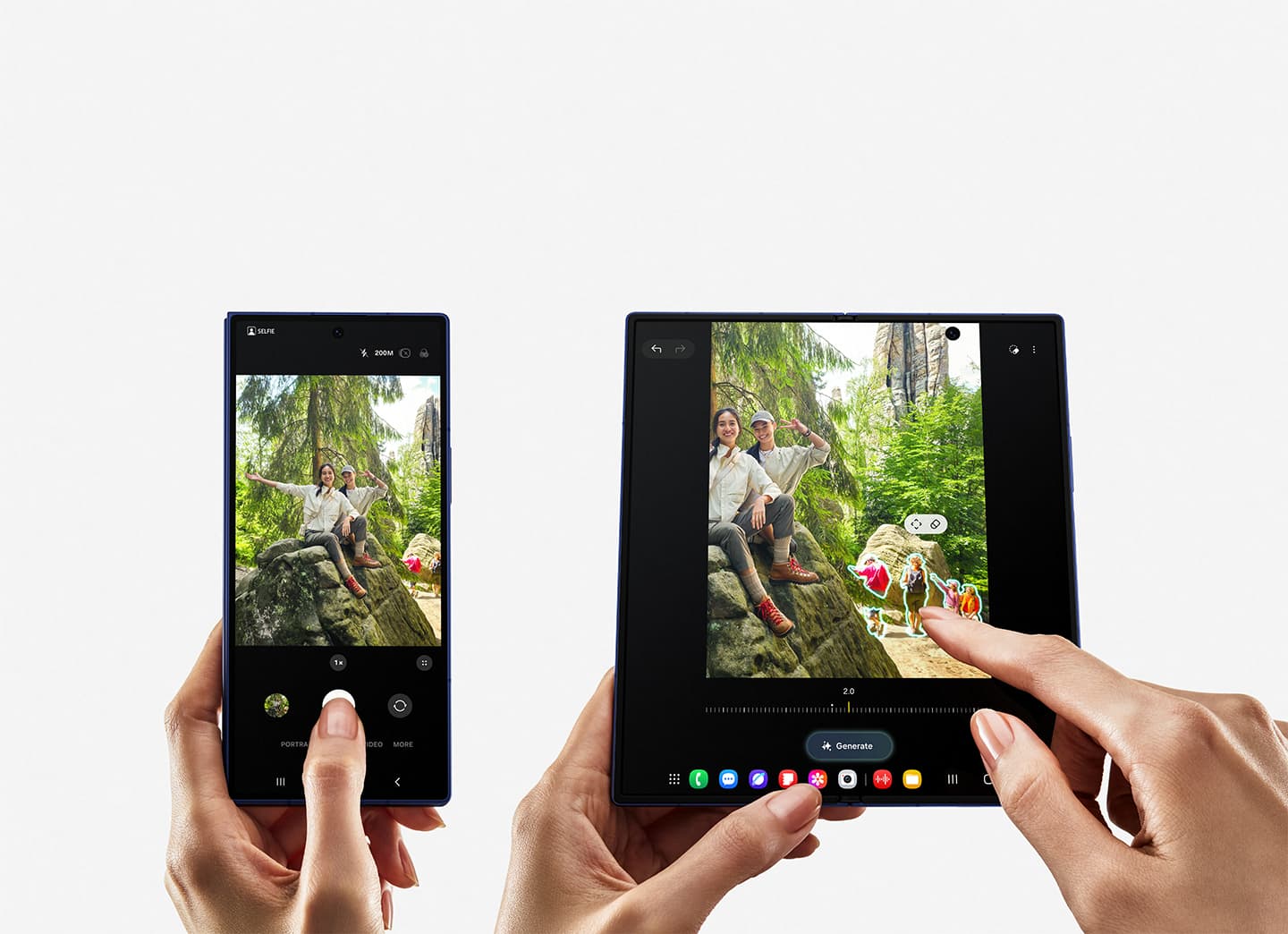
Both open onto about eight inches and they are not the same shape. The Pixel's 8-inch Super Actua Flex OLED is 2152 by 2076 pixels, tall by wide, which is very nearly square. The Samsung's 8.0-inch QXGA+ Dynamic AMOLED 2X is 2184 by 1968, so it is noticeably taller than it is wide. The physical bodies say the same thing: unfolded, the Pixel is 155.2 mm tall by 150.4 wide and the Samsung is 158.4 by 143.2. A near-square panel suits two apps side by side; a taller one suits reading and a single app at full height. Both run from 1Hz to 120Hz, and the pixel densities are 373 and 368 ppi, close enough to ignore.
A note on brightness
Google publishes up to 1800 nits HDR and 3000 nits peak for the inner display. Samsung publishes no brightness figure for the inner display in the source we use. That is a gap in what has been published, not a darker screen, and we are not putting a number beside an absence.
The cover screen
This is the screen you use without opening anything, and it is worth more attention than its size suggests. The Pixel's is 6.4 inches, 2364 by 1080 at 408 ppi, 20:9, and runs from 60Hz to 120Hz. The Samsung's is 6.5 inches, 2520 by 1080 at 422 ppi, 21:9, and runs from 1Hz to 120Hz. The Samsung's is slightly larger, slightly sharper and the taller shape of the two; it is also the one that can drop to 1Hz, where the Pixel's cover screen floor is 60Hz.
Cameras
Both have three rear lenses and the architecture differs more than the sensor sizes suggest. The Pixel pairs a 48MP wide with a 10.5MP ultrawide that has autofocus and Macro Focus, and a 10.8MP telephoto with OIS at 5x optical, plus Super Res Zoom to 20x. The Samsung pairs a 200MP wide with OIS, a 12MP ultra-wide, and a 10MP telephoto with OIS at 3x optical. Megapixels are not a measure of quality and we do not read them as one; what changes the pictures you can take is that one of these reaches 5x optically and the other 3x, and that only one of them has an ultrawide that can focus close enough for macro. Both put a 10MP camera on the cover and another for the inner screen.
Folded size and weight
Folded, the Pixel is 155.2 mm tall, 76.3 wide and 10.8 deep, at 258 g. The Samsung is 158.4 tall, 72.8 wide and 8.9 deep, at 215 g. So the Samsung is the thinner and lighter of the two folded, and also the narrower, while being about 3 mm taller. Opened, the same holds: 5.2 mm against 4.2 mm. Forty-three grams and nearly two millimetres is the kind of difference you notice in a pocket every day, and it is the clearest argument either phone makes.
Water and dust
A real difference, and worth stating precisely rather than as a word. The Pixel 10 Pro Fold is rated IP68, tested under IEC standard 60529. The Galaxy Z Fold7 is rated IP48: Samsung documents submersion in up to 1.5 metres of fresh water for up to 30 minutes under lab conditions, and advises against beach and pool use. Under that standard the first digit describes solid particles, and a 4 covers objects larger than 1 mm where a 6 means dust-tight. Neither of these is a single word, and the difference here is as much about dust as it is about water.
Battery
We will not put these two side by side as runtimes, because the published figures do not measure the same thing. Google states a 24-plus-hour battery life estimate, up to 84 hours with Extreme Battery Saver, and a typical capacity of 5015 mAh. Samsung states a typical capacity of 4,400 mAh and video playback of up to 24 hours. Both print the number 24, from a mixed-use estimate on one side and a video-playback test on the other, which is a coincidence of wording rather than a tie. The capacities are comparable as capacities — 5015 mAh against 4,400 mAh — and they tell you how much energy each carries, not how long either lasts.
Storage and memory
The capacities are the same: 256GB, 512GB and 1TB on both. What differs is the memory. The Pixel states 16GB across the range. The Samsung states 12GB at 256GB and 512GB, and 16GB only at 1TB. So at the entry configuration the Pixel carries more memory, and at the top they match.
Charging
Both quote about half in around 30 minutes, and the conditions behind those numbers are not identical, so treat them as two separate claims rather than a measured draw. Google's figure is with a 30W USB-C PPS charger or higher, and wireless is Pixelsnap, Qi2-certified, up to 15W. Samsung's is with a 25W adapter and a 3A USB-C cable, with Fast Wireless Charging 2.0 and Wireless PowerShare for topping up accessories from the phone.
Software and updates
Both run Android 16, so the platform is shared ground rather than the decision. On top of it the Samsung runs One UI 8, Samsung's own layer, and the Pixel runs Google's own Pixel software; which you prefer is a matter of habit and we are not calling either better. The update commitment is where they genuinely part, and only as far as what is published: Google commits explicitly to seven years of OS, security and Pixel Drop updates for the Pixel 10 Pro Fold. Samsung publishes no equivalent minimum for the Z Fold7 in the sources we use, so our software support field for it is empty. That is a gap in publication, not evidence of a shorter life. The chips also differ — a Tensor G5 with a Titan M2 security coprocessor against a Snapdragon 8 Elite for Galaxy — and we have no shared benchmark to put either name in order.
Which one may fit you better
Consider the Pixel 10 Pro Fold if you want 5x optical reach rather than 3x, if an IP68 rating matters to you, if you want an ultrawide that can focus close, or if a written seven-year update commitment is part of what you are buying. Consider the Galaxy Z Fold7 if you want the lighter and thinner body of the two folded, if 72.8 mm across closed suits your pocket better than 76.3, if you want a 200MP wide camera, or if the taller cover screen is the one you would rather use all day.
Important considerations
The IP48 rating is the one thing on this page that can rule a phone out rather than rank it, and Samsung's own advisory is the clearest statement of it. In the other direction, 43 g and 1.9 mm folded is a difference you carry every day and no feature list compensates for a phone you stop taking out. Neither link on this page is a paid placement: both go to the maker’s own store. And both commit you to Android, so neither is an answer if your watch, tablet and messages are already on iOS.