Oura Ring 5 vs Samsung Galaxy Ring
Two titanium smart rings, both screenless and both worn around the clock, that separate on cost and reach. Galaxy Ring is $299.99 with no subscription at all, but needs a Samsung Galaxy phone. Oura Ring 5 is $399 plus a membership for its full app, and works with any recent iPhone or Android.
Affiliate disclosure: we may earn a commission from eligible partner links. Read our affiliate disclosure
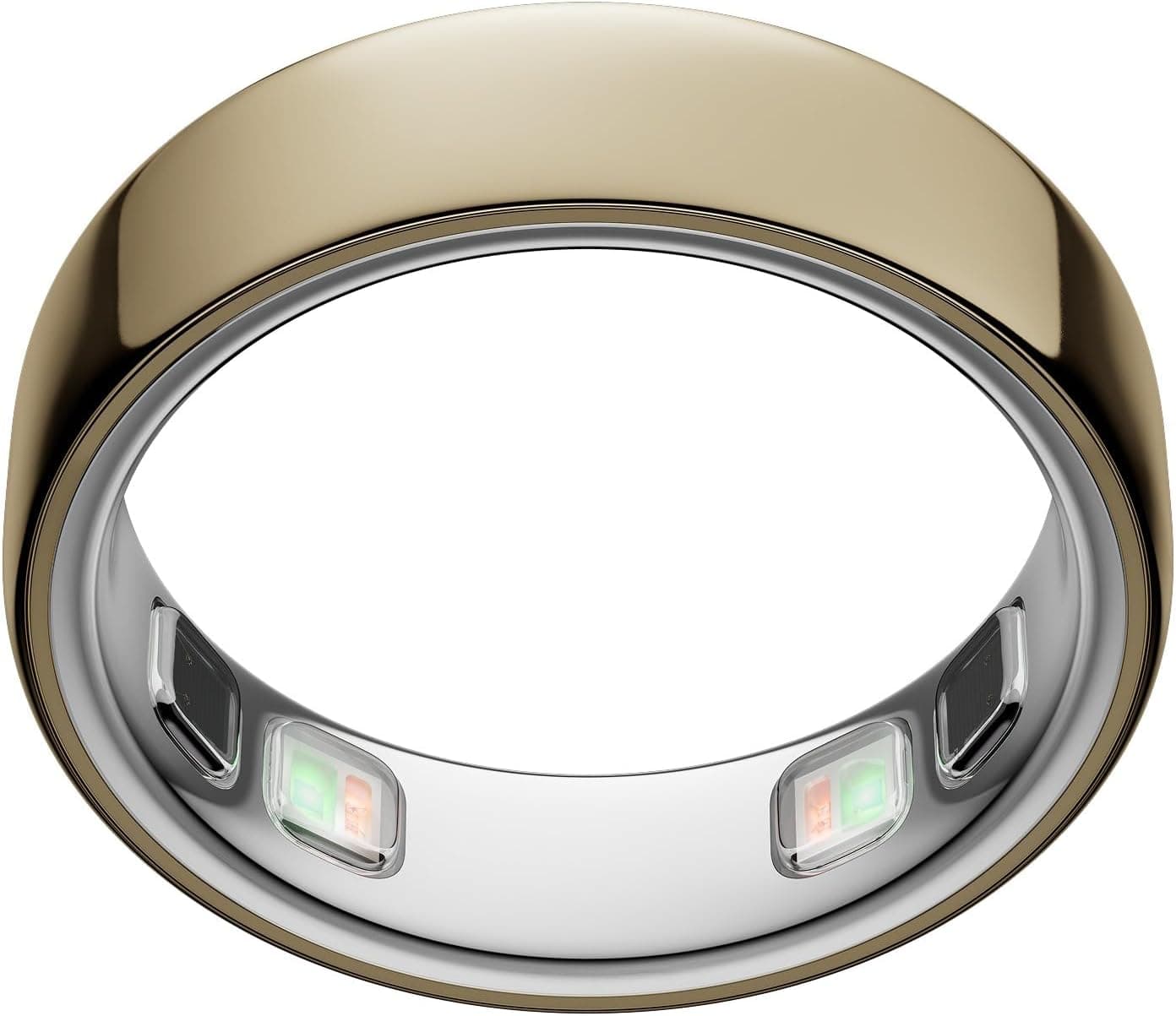
Oura Ring 5
A screenless titanium smart ring from $399 that tracks sleep, readiness and recovery around the clock, with an Oura Membership for the full app experience.
Best forDetailed sleep, readiness and recovery tracking in a ring
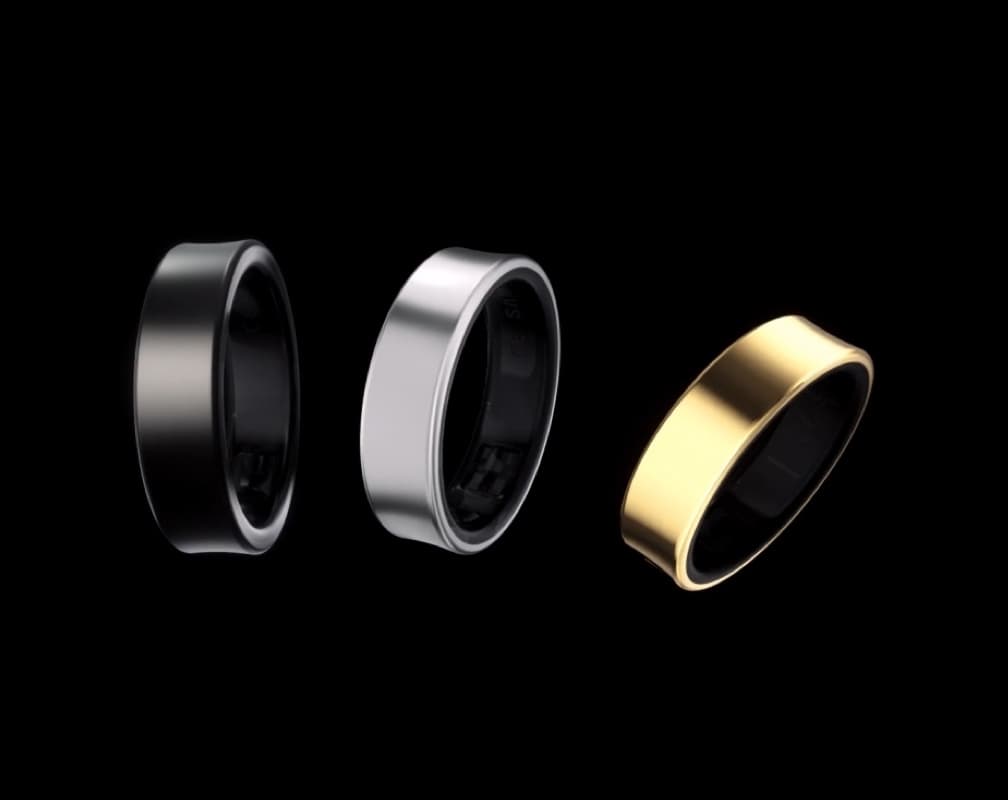
Samsung Galaxy Ring
Samsung's screenless titanium smart ring from $299.99, tracking sleep, heart rate and an Energy Score through Samsung Health — and it needs a Galaxy phone.
Best forSamsung Galaxy owners wanting screenless sleep and health tracking
Quick answer
Choose Oura Ring 5 if
- You want detailed sleep tracking from something you can forget you are wearing
- You would rather wear a ring than a watch or a wrist band
- You want daily readiness and recovery guidance rather than workout controls
- You want passive health tracking with no screen and no notifications
- Six to nine days between charges suits you better than nightly charging
Choose Samsung Galaxy Ring if
- You already use a Samsung Galaxy phone and Samsung Health
- You want a screenless tracker you can forget you are wearing
- Sleep, recovery and an everyday readiness score are your priority
- You would rather pay once than add a monthly membership
- You prefer a ring to a watch or a wrist band
At a glance
| Criterion | Oura Ring 5 | Samsung Galaxy Ring |
|---|---|---|
| Best for | Detailed sleep, readiness and recovery tracking in a ring | Samsung Galaxy owners wanting screenless sleep and health tracking |
| Pricing | From $399 one-off; membership $5.99/mo or $69.99/yr | One-off purchase from $299.99; no subscription |
| Trial | One month of Oura Membership included from pairing | No trial — there is no subscription to try |
| Platform | Oura App on iOS 16+ and Android 11+ | Needs a Samsung Galaxy phone and a Samsung account |
| Key differentiator | A 2-gram titanium ring with 6-9 day battery, read entirely through the app | A titanium ring with no subscription at all, but it needs a Samsung Galaxy phone to work |
| Category | Wearables | Wearables |
Key facts
| Fact | Oura Ring 5 | Samsung Galaxy Ring |
|---|---|---|
| Price | From $399 (Silver, Black); other finishes $499 | From $299.99 |
| Display | Screenless — data read in the Oura App | Screenless — data read in Samsung Health |
| Battery life | Typically 6-9 days | Up to 7 days (sizes 12-13); up to 6 days smaller |
| Platform | iOS 16+ and Android 11+ | Samsung Galaxy phone and Samsung account required |
| Subscription | Membership $5.99/mo or $69.99/yr | None required |
| Trial | One month included from pairing | No subscription, so no trial |
| Water resistance | 100 m, IP68 | 10ATM and IP68 |
| Core focus | Sleep, readiness and recovery tracking | Sleep, Energy Score and everyday health tracking |
Overview
These are the two smart rings in this catalogue, and they are closer in shape than in strategy. Both are titanium, both are screenless, both are worn continuously, both run for most of a week between charges, and both put everything in a phone app. Where they separate is money and reach. Galaxy Ring costs less and asks for nothing afterwards, but only works with a Samsung Galaxy phone. Oura Ring 5 costs more and adds a membership for its full app, but works on any recent iPhone or Android. For most people one of those two sentences settles it.
Key differences
Four differences decide this comparison, and the rest is detail. Galaxy Ring starts at $299.99 against $399 for Oura Ring 5. Galaxy Ring has no subscription of any kind, while Oura's full experience runs on a membership at $5.99 a month or $69.99 a year. Oura works with iOS 16 or later and Android 11 or later; Samsung states a Samsung account must be registered on a Samsung Galaxy phone to start using Galaxy Ring. And Oura's health layer goes considerably deeper, with readings Samsung does not publish for its ring. The first three favour Galaxy Ring on cost and Oura on reach; the fourth is where the extra money goes.
Price and ongoing cost
The two costs have to be read separately. Galaxy Ring is $299.99 once, and that is the whole price — Samsung Health is free and there is no membership to buy, so there is also nothing to trial.
Oura Ring 5 is $399 in Silver and Black, or $499 in Gold, Deep Rose, Stealth and Brushed Silver, and the full app runs on Oura Membership at $5.99 per month or $69.99 per year, with one month included from the moment the ring is paired. Membership is optional rather than required, and Oura documents what remains without it: your three daily scores — Readiness, Activity and Sleep — plus ring battery, basic profile information, app settings and the Explore content. The detailed analysis, the personalised insights and the API sit behind the membership.
So a lapsed Oura member keeps a working ring producing its headline numbers, and a Galaxy Ring owner never faces the question. The gap at purchase is about $99; the recurring gap is whatever you decide Oura's deeper layer is worth to you.
Platform and phone compatibility
This is the hardest filter in the comparison, and it is worth checking before anything else. Oura Ring 5 works with the Oura App on iOS 16 or later and Android 11 or later. Galaxy Ring requires a Samsung Galaxy phone: Samsung states a Samsung account must be registered on your Samsung Galaxy smartphone to start using it, and the Galaxy AI features that produce Energy Score and Wellness Tips carry the same requirement.
If you carry an iPhone, or an Android phone that is not a Samsung Galaxy, Galaxy Ring is not the product to buy and the rest of this page is academic. If you carry a Samsung Galaxy, both are open to you.
Sleep and recovery
Both rings are built around sleep, and both are light enough to forget overnight. Oura reports a Sleep Score built from total sleep, heart rate variability, nighttime movement and sleep regularity, with sleep stages covering deep, REM and light, plus Bedtime Guidance, Nighttime Breathing and blood oxygen sensing that can indicate breathing disturbances. Its morning figure is the Readiness Score, drawn from temperature trends, heart rate and sleep.
Samsung reports sleep quality with personalised tips, adds snore detection, and produces Energy Score each morning — calculated with Galaxy AI from the previous day's sleep, heart rate and activities — alongside Wellness Tips that return suggestions against a focus you choose. Both platforms ask for consistency before the longer-horizon readings settle: Samsung states the ring must be worn for 7 nights in a 30-night period, and Oura's setup is similar in spirit.
The daily figures are each company's own construction, calculated and scaled their own way, so a Readiness Score and an Energy Score are not interchangeable readings even though they answer the same question.
Health tracking
This is where the price difference shows. Both cover continuous heart rate and skin temperature, and both use those temperature readings for cycle insights.
Oura adds more on top: blood oxygen sensing, respiration rate, Daytime Stress, Resilience, Cardiovascular Age, Cardio Capacity as a VO2 Max estimate, Blood Pressure Signals, and a Health Radar group that includes Symptom Radar, which watches biometrics for signs of strain and can flag them before a cold or flu is felt. Its sensor array is two tri-LED emitters covering red, green and infrared light, two photodetectors, a digital temperature sensor and an accelerometer.
Galaxy Ring carries three sensors — an accelerometer, an optical bio-signal sensor and a skin temperature sensor — feeding heart rate, temperature trends, Energy Score and Wellness Tips. Samsung does not document blood oxygen sensing for this ring, so a reading Oura publishes has no counterpart here rather than a worse one.
Neither company presents any of this as diagnostic. Oura states that Health Radar features are intended for general wellness purposes only and are not intended to diagnose, treat, cure, mitigate, monitor or prevent any disease, illness or medical condition, that they should not replace clinical assessment or be used to delay or modify medical care, and that anyone with health concerns should consult a qualified healthcare professional. Samsung states its heart rate software functions are not intended for use in the diagnosis of disease or other conditions, or in the cure, mitigation, treatment or prevention of disease. On both rings, cycle tracking is explicitly not intended for contraception, and Samsung restricts it to users 18 and over.
Battery and charging
The battery figures are close and the charging arrangements are not. Oura quotes typically six to nine days, varying with ring size and usage, charging in about 80 minutes over USB-C.
Samsung quotes up to 7 days, and the scope matters: that figure is for sizes 12 and 13, with up to 6 days on smaller sizes, and results vary. The difference is what comes in the box. Galaxy Ring ships in a charging cradle with a clear cover, which Samsung says extends total use to up to 14 days away from an outlet when combined with a full cradle charge; the cradle has an LED ring and a multi-purpose button that shows battery level on a short press and starts pairing on a three-second press. Oura's charging case is sold separately, and Oura says it returns a full day of battery in ten minutes.
In practice both are weekly devices. Galaxy Ring arrives ready to travel without a charger; with Oura that costs extra.
Sizing and comfort
Sizing is a real part of this purchase, because a ring cannot be resized after it arrives. Both makers sell a sizing kit rather than publish a chart, and both warn that your usual ring size may not be the right one because the sensors sit inside the band.
Galaxy Ring runs sizes 5 to 15. Samsung's process ships the kit first when you order with the "I don't know my size" option, asks you to wear a sample for more than 24 hours including while sleeping, then takes your confirmation on the My Order page before the real ring is sent. Oura Ring 5 runs sizes 6 to 13 in whole sizes only, with its own kit and the same advice to wear a sample for a day before confirming.
Samsung's range is the wider of the two at both ends, which matters if your finger falls outside 6 to 13. Neither company publishes a comparative comfort study, so which feels better to wear is a personal matter rather than a specification.
Apps and ecosystem
Oura's app is self-contained and works the same on either phone platform. It documents an Apple Health integration on iOS and a Health Connect integration on Android, both of which require an active membership.
Galaxy Ring is a Samsung ecosystem product rather than an Android one. Samsung Health is the interface, health data is stored in the Samsung Cloud connected to your Samsung account, and the ring also works as a controller: a double pinch takes a photo or dismisses an alarm on a paired phone, and Find My Ring shows its last known location on a map. Samsung markets it alongside Galaxy Watch as a combined setup.
Neither ring has GPS of its own. For route, pace and distance both depend on the phone, so leaving the phone behind loses the route on either device.
Which one may fit you better
Galaxy Ring may suit someone already carrying a Samsung Galaxy phone who wants continuous sleep and health tracking without a recurring fee, who values the charging case being included, and whose finger size sits at the wider end of the range. It is the cheaper device to own over any period, because the ongoing cost is zero.
Oura Ring 5 may suit someone who carries an iPhone or a non-Samsung Android, or who wants the deeper health layer — blood oxygen, cardiovascular readings, stress and resilience trends, illness signals — and is willing to pay a membership for it. It also suits anyone who wants the option of changing phone platform later without replacing the ring.
Anyone who wants a screen, notifications, on-device workout controls or GPS without a phone is served by neither, and should be looking at a watch instead.
Important considerations
The Samsung Galaxy phone requirement is the single most consequential line on this page, and it is easy to read past: Galaxy Ring is not an Android product, it is a Samsung product. Several Oura features — the Apple Health and Health Connect integrations, the detailed analysis and the personalised insights — require an active membership, so comparing Oura's full feature list against Galaxy Ring's while assuming no membership would overstate what the $399 alone buys. Battery figures on both sides vary by ring size and use. Health features on both are wellness features, not diagnostic tools, and several carry age or regional limits. Prices, membership terms and availability change; confirm current terms with Oura and Samsung before buying.