Garmin Venu 4 vs Amazfit Balance 3
Both are cross-platform training watches with multi-day battery and no subscription, which makes the $180 between them the question. The Balance 3 answers it with more battery, a deeper water rating and a much larger case; the Venu 4 answers it with a longer-established platform and a watch most wrists can wear.
Affiliate disclosure: we may earn a commission from eligible partner links. Read our affiliate disclosure
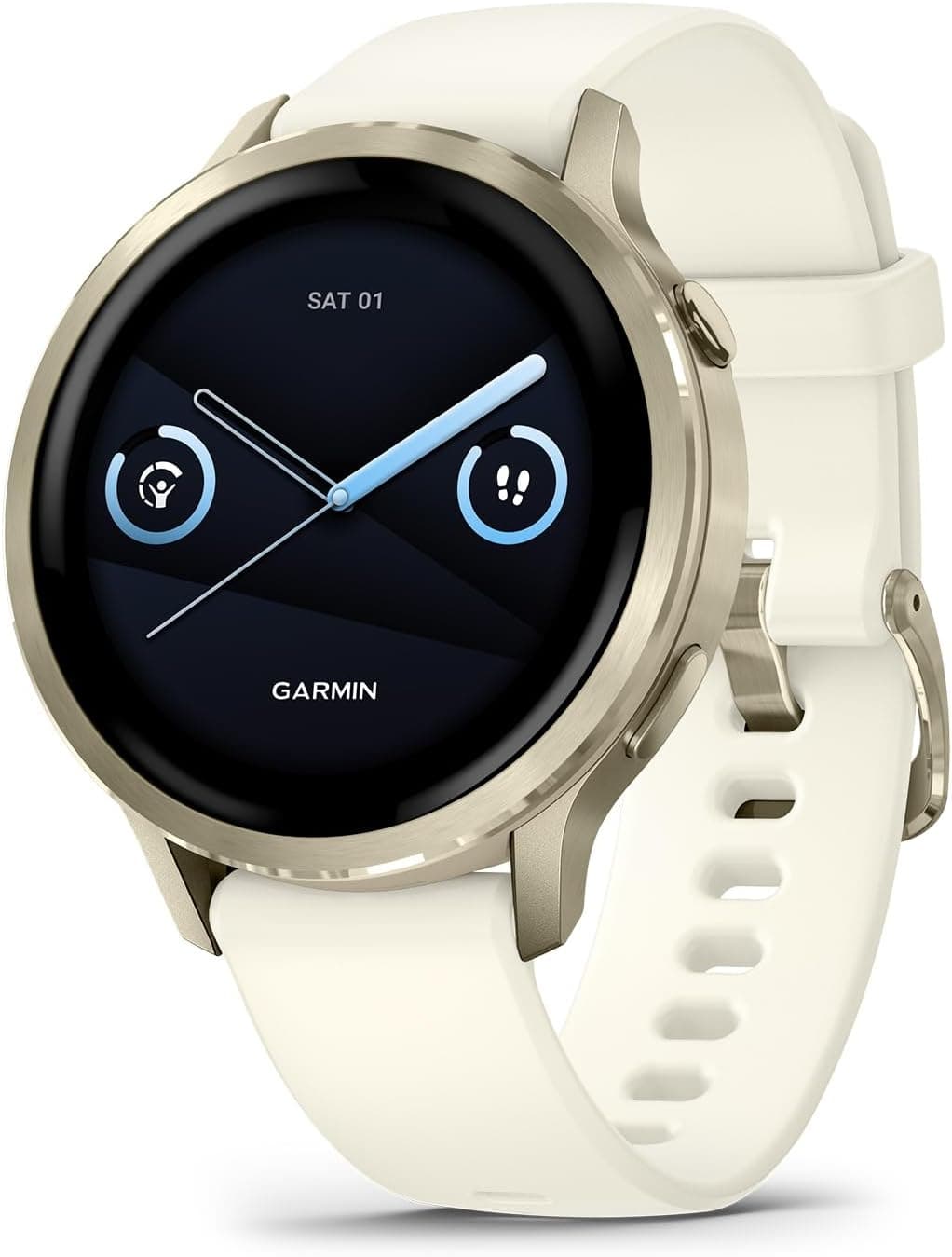
Garmin Venu 4
A fitness and wellness smartwatch from $549.99 with an AMOLED display, multi-band GPS and up to 12 days of battery, working with both iPhone and Android.
Best forMulti-day battery with full training and recovery tracking
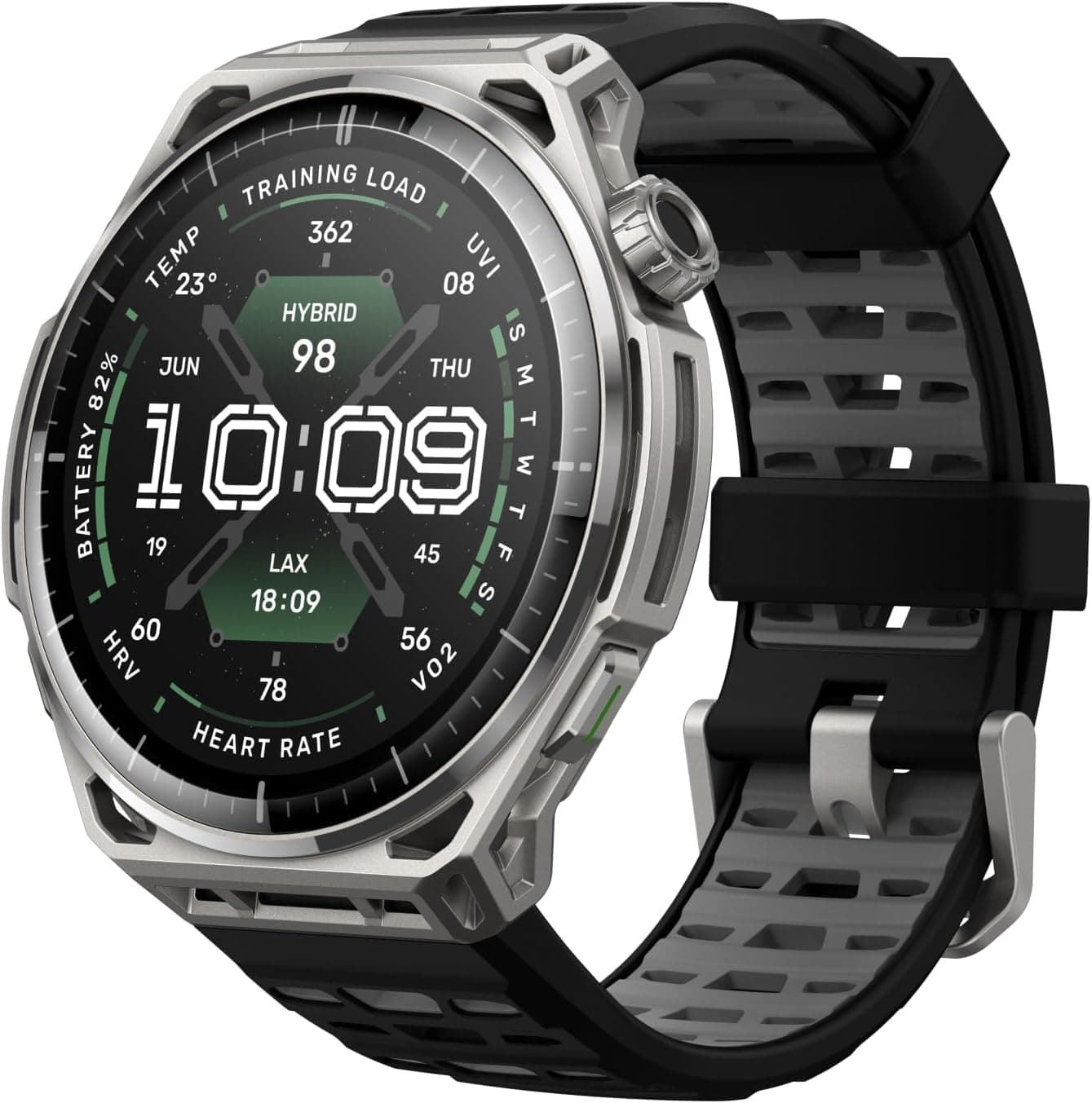
Amazfit Balance 3
A hybrid-training smartwatch from $369.99 with preloaded topographic and ski maps, a 3,000-nit sapphire display and up to 21 days of typical battery life.
Best forHybrid and multisport training with offline navigation
Quick answer
Choose Garmin Venu 4 if
- You want smartwatch features and detailed fitness metrics in one device
- You would rather charge weekly than nightly
- You want training readiness, Body Battery and recovery tools without a subscription
- You use either an iPhone or an Android phone and want the same experience
- You want GPS, offline music and contactless payments on the wrist
Choose Amazfit Balance 3 if
- You train across strength and endurance and want structured plans rather than step counts
- You want maps, route planning and auto-rerouting on the wrist, with no subscription
- You would rather charge a watch every two to three weeks than every night
- You carry either an iPhone or an Android phone and want the same watch to work with both
- You compete in HYROX or similar hybrid events and want a dedicated race mode
At a glance
| Criterion | Garmin Venu 4 | Amazfit Balance 3 |
|---|---|---|
| Best for | Multi-day battery with full training and recovery tracking | Hybrid and multisport training with offline navigation |
| Pricing | One-off purchase from $549.99; no subscription | From $369.99 steel, $449.99 titanium; no subscription required |
| Trial | No trial — the watch is bought outright | No device trial; optional Zepp subscriptions list 7- or 14-day trials |
| Platform | Garmin Connect on iPhone and Android | iOS 17+ and Android 8+; call quick reply is Android-only |
| Key differentiator | Up to 12 days of battery with full Garmin training and recovery metrics | Preloaded base, contour and ski maps with auto-rerouting, a 3,000-nit sapphire display and up to 41 hours of accurate-mode GPS |
| Category | Wearables | Wearables |
Key facts
| Fact | Garmin Venu 4 | Amazfit Balance 3 |
|---|---|---|
| Price | Starting at $549.99 | From $369.99 (steel); $449.99 (titanium) |
| Display | AMOLED touchscreen, optional always-on | 1.5" AMOLED, 480x480, sapphire glass, up to 3,000 nits |
| Battery life | 41mm: up to 10 days; 45mm: up to 12 days | Up to 21 days typical; 10 days heavy; 41 h accurate GPS |
| Platform | iPhone and Android via Garmin Connect | iOS 17.0+ and Android 8.0+ via the Zepp App |
| Subscription | None required | None required for device features |
| Water resistance | 5 ATM | 10 ATM; certified for 45 m freediving |
| Core focus | Fitness and wellness smartwatch with training tools | Hybrid training, recovery and offline navigation |
| Case sizes | 41 mm and 45 mm | 51.4 mm, in steel or titanium |
Overview
These two agree on more than they disagree on. Both are training watches with an AMOLED display, both work with an iPhone and an Android phone, both publish training and recovery metrics, and neither requires a subscription. Then the Venu 4 asks $549.99 and the Balance 3 asks $369.99, and everything below is what that $180 buys or costs.
Key differences
Four things decide it. Battery: up to 12 days against up to 21. Size: 41 or 45 mm against a single 51.4 mm. Water: 5 ATM against 10 ATM with a separate certification for 45 m freediving. And platform maturity: Garmin Connect against the Zepp App, which is the hardest of the four to put a number on and the one most likely to matter daily.
Price
$549.99 for the Venu 4 in either size, $369.99 for the Balance 3 in stainless steel or $449.99 in titanium. Even the titanium Balance 3 undercuts the Garmin by $100. Neither price includes a subscription, and neither product withholds a feature behind one.
Battery
Garmin quotes up to 10 days on the 41 mm and up to 12 on the 45 mm. Amazfit quotes up to 21 days of typical use, up to 10 days of heavy use, and separately up to 41 hours in accurate GPS mode. The gap is real but smaller than the headline: the Balance 3's heavy-use figure and the Venu 4's typical figure land in the same place. If you train with GPS most days, compare the heavy-use numbers rather than the best cases.
Size and fit
This is the difference most likely to end the comparison. The Venu 4 comes in 41 mm and 45 mm. The Balance 3 comes in one size, 51.4 mm, weighing 62 g in steel or 55 g in titanium. That is a large watch by any measure, and no amount of battery compensates for one that does not fit. Check it against your own wrist before anything else on this page.
Training and recovery
Both publish a training-load figure and a recovery or readiness status, which is the loop that makes structured training possible. Garmin provides training readiness, training status and recovery time. Amazfit provides HybridCharge, built from BioCharge, LifeLoad and Training Load, plus Training Stress Balance, lactate threshold and running power. These are each maker's own models with their own names, and a score from one means nothing in the other.
Navigation
The Balance 3 is the stronger case here. It carries base, contour and ski maps preloaded on 64 GB, with turn-by-turn directions, route planning, round-trip generation and automatic rerouting, and it charges nothing extra for any of it. The Venu 4 has multi-band GPS but is the wellness end of Garmin's range rather than its navigation end. If maps on the wrist are the point, this is the axis that decides.
Water and diving
The Venu 4 is rated 5 ATM, which covers swimming. The Balance 3 is rated 10 ATM and separately certified for freediving to 45 m and for recreational scuba. Those are different claims about different activities, and only one of these two watches makes the second one.
Phone compatibility
Both work with an iPhone and an Android phone, which already puts them ahead of every other watch in this catalogue except the Apple ones in reverse. The versions differ: Garmin Connect states iPhone and Android broadly, while the Balance 3 requires iOS 17 or newer and Android 8 or newer. An older phone may pair with one and not the other.
Ecosystem
Garmin Connect has been collecting training data for years and syncs with most of what a runner already uses. The Zepp App is younger and documents its own list, including Strava, TrainingPeaks, Intervals.ICU, Apple Health, Google Fit and Runna, while stating that it does not sync with Samsung Health or MyFitnessPal. Check the apps you already keep your history in before deciding this one on specifications.
Which one may fit you better
Consider the Venu 4 if you want a watch in a size most wrists can wear, if you already have history in Garmin Connect, or if your training is more everyday wellness than expedition. Consider the Balance 3 if you want three weeks between charges, maps and routing on the wrist at no extra cost, a certified diving rating, or simply the lower price.
Important considerations
The Balance 3 is a substantially larger watch and that is not a specification, it is whether you will wear it. Amazfit's own comparison table also places a Balance Ultra above it, so this is not the top of that range. And training scores do not transfer between Garmin Connect and the Zepp App, so switching means starting again.