Google Pixel 10 vs Google Pixel 10 Pro
$200 between two phones of identical size, chip and update window: a sharper LTPO screen, an ultrawide that autofocuses, a 42MP front camera and tiers to 1TB.

The short version
| Criterion | Google Pixel 10 | Google Pixel 10 Pro |
|---|---|---|
| Price | From $799 | From $999 |
| Display | 6.3-inch Super Actua OLED, 2424 x 1080 (tall x wide) at 422 ppi; Smooth Display 60-120Hz; up to 2000 nits HDR and 3000 nits peak | 6.3-inch Super Actua LTPO OLED, 2856 x 1280 (tall x wide) at 495 ppi; Smooth Display 1-120Hz; up to 2200 nits HDR and 3300 nits peak |
| Camera system | Advanced triple rear system: 48MP wide (f/1.70, 82 degrees), 13MP ultrawide (f/2.2, 120 degrees), 10.8MP telephoto with OIS (f/3.1, 23 degrees, 5x optical); 10.5MP front camera (f/2.2, 95 degrees); Super Res Zoom up to 20x | Pro triple rear system: 50MP wide (f/1.68, 82 degrees), 48MP ultrawide with autofocus and Macro Focus (f/1.7, 123 degrees), 48MP telephoto with OIS (f/2.8, 22 degrees, 5x optical); 42MP front camera (f/2.2, 103 degrees); Pro Zoom up to 100x |
| Storage | 128GB and 256GB; 12GB of memory | 128GB, 256GB, 512GB and 1TB; 16GB of memory |
Which one fits
Consider Google Pixel 10 if
- You want a Pixel at $799 to start
- You want a 2424 x 1080 display at 422 ppi
- You want a 4,970 mAh typical cell
Consider Google Pixel 10 Pro if
- You want a 2856 x 1280 display at 495 ppi
- You want an ultrawide that autofocuses, with Macro Focus
- You want a 42MP front camera
Main tradeoffs
- $799 to start, the same Tensor G5 in the same body, and the same seven-year update windowa 2424 x 1080 screen rather than 2856 x 1280, an ultrawide that does not autofocus, and 256GB as the ceiling
- A 2856 x 1280 LTPO screen at 495 ppi, an ultrawide with autofocus and Macro Focus, a 42MP front camera and tiers to 1TB$999 to start, in a body the same size and shape as the one below it
At a glance
| Criterion | Google Pixel 10 | Google Pixel 10 Pro |
|---|---|---|
| Best for | People who want Google's camera software and an optical telephoto at a mid-flagship price, and do not need the Pro's display or sensor sizes | People who want a 5x telephoto in a 6.3-inch phone and a long, explicitly published update window, and do not need the newest generation |
| Pricing | From $799 | From $999 |
| Platform | Android 16 at launch; Google states seven years of OS, security and Pixel Drop updates | Android 16 at launch; Google states seven years of OS, security and Pixel Drop updates |
| Key differentiator | A 5x optical telephoto and seven years of OS, security and Pixel Drop updates at $799, in the same 152.8 mm body as the Pro | Seven years of OS, security and Pixel Drop updates stated by Google, alongside a 5x optical telephoto and Pro Zoom to 100x in a 6.3-inch body |
| Category | Phones | Phones |
Key facts
| Fact | Google Pixel 10 | Google Pixel 10 Pro |
|---|---|---|
| Price | From $799 | From $999 |
| Display | 6.3-inch Super Actua OLED, 2424 x 1080 (tall x wide) at 422 ppi; Smooth Display 60-120Hz; up to 2000 nits HDR and 3000 nits peak | 6.3-inch Super Actua LTPO OLED, 2856 x 1280 (tall x wide) at 495 ppi; Smooth Display 1-120Hz; up to 2200 nits HDR and 3300 nits peak |
| Battery life | 24+ hour battery life; up to 100 hours with Extreme Battery Saver; typical 4970 mAh (minimum 4835 mAh) | 24+ hour battery life; up to 100 hours with Extreme Battery Saver; typical 4870 mAh (minimum 4707 mAh) |
| Chip | Google Tensor G5 with Titan M2 security coprocessor | Google Tensor G5 with Titan M2 security coprocessor |
| Camera system | Advanced triple rear system: 48MP wide (f/1.70, 82 degrees), 13MP ultrawide (f/2.2, 120 degrees), 10.8MP telephoto with OIS (f/3.1, 23 degrees, 5x optical); 10.5MP front camera (f/2.2, 95 degrees); Super Res Zoom up to 20x | Pro triple rear system: 50MP wide (f/1.68, 82 degrees), 48MP ultrawide with autofocus and Macro Focus (f/1.7, 123 degrees), 48MP telephoto with OIS (f/2.8, 22 degrees, 5x optical); 42MP front camera (f/2.2, 103 degrees); Pro Zoom up to 100x |
| Operating system | Launched with Android 16 | Launched with Android 16 |
| Charging | Up to 55% in about 30 minutes with a 30W USB-C PPS charger or higher; Pixelsnap wireless charging (Qi2-certified) up to 15W | Up to 55% in about 30 minutes with a 30W USB-C PPS charger or higher; Pixelsnap wireless charging (Qi2-certified) up to 15W |
| Size and weight | 152.8 mm tall x 72.0 wide x 8.6 deep; 204 g | 152.8 mm tall x 72.0 wide x 8.6 deep; 207 g |
| Storage | 128GB and 256GB; 12GB of memory | 128GB, 256GB, 512GB and 1TB; 16GB of memory |
| Software support | 7 years of OS, security, and Pixel Drop updates | 7 years of OS, security, and Pixel Drop updates |
| Water resistance | IP68 dust and water resistance, under IEC standard 60529 | IP68 dust and water resistance, under IEC standard 60529 |
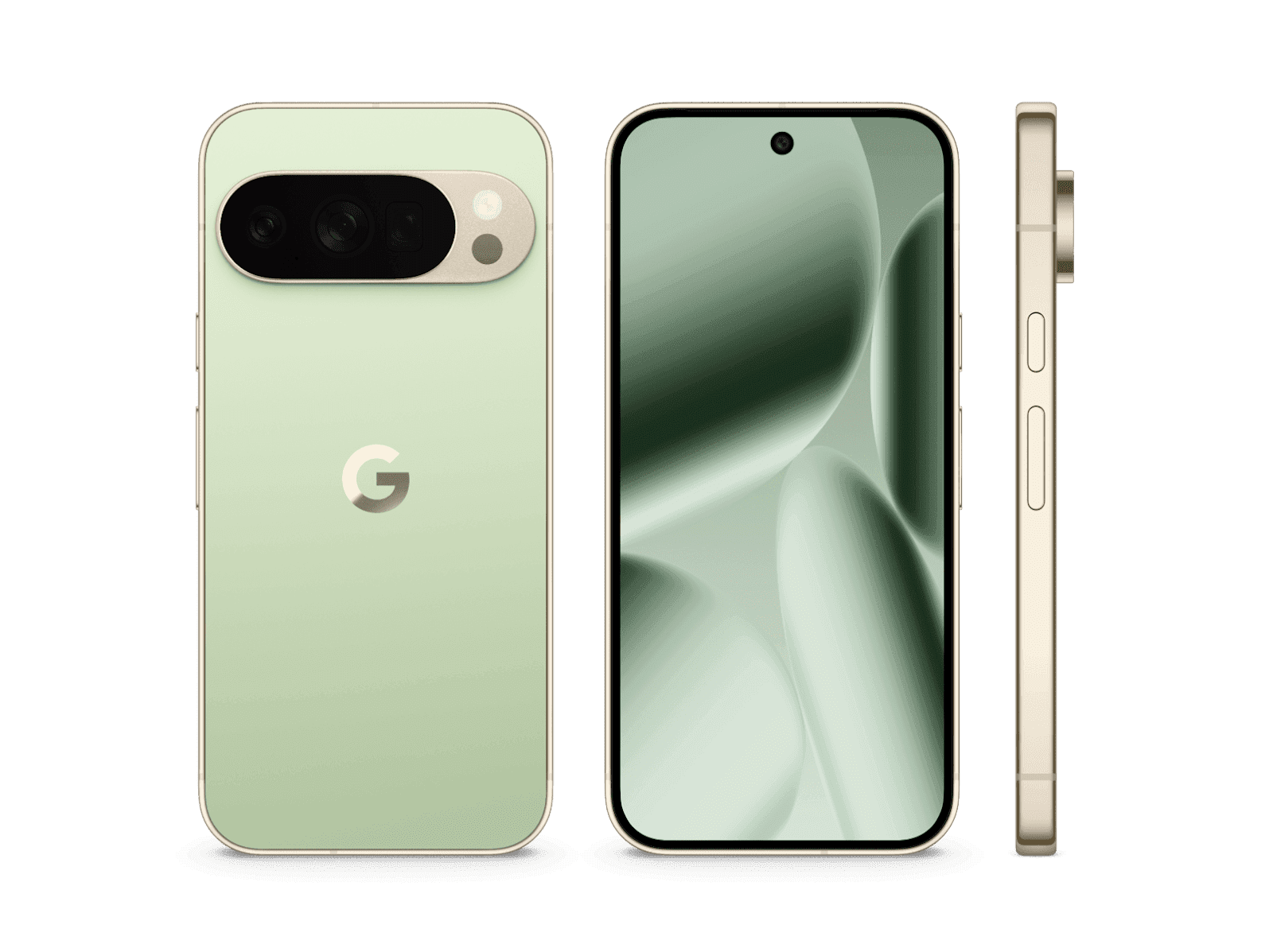
Two phones that are the same object: 152.8 mm tall, 72.0 wide, 8.6 deep, three grams apart, with the same Tensor G5, the same charging, the same IP68 rating and the same seven-year update window. $200 changes the screen, the cameras and how much storage you can buy.
Overview
Most comparisons start by listing what two phones have in common and then move on. Here that list is the comparison. The Pixel 10 and the Pixel 10 Pro are 152.8 mm tall, 72.0 mm wide and 8.6 mm deep — the same numbers, not similar ones. Both run the Tensor G5 with the Titan M2 coprocessor. Both charge to 55% in about 30 minutes on a 30W USB-C PPS charger and support Pixelsnap wireless at 15W. Both are IP68. Both launched with Android 16 and both carry Google's seven years of OS, security and Pixel Drop updates. Four things change for $200: the screen, the cameras, the storage you can buy, and three grams.
Key differences
$799 against $999. A 2424 x 1080 screen at 422 ppi against 2856 x 1280 at 495. A refresh rate that drops to 60Hz against one that drops to 1Hz. Three rear cameras in both, but 48MP, 13MP and 10.8MP against 50MP, 48MP and 48MP, with autofocus and Macro Focus on the Pro's ultrawide and a 42MP front camera instead of 10.5MP. And a storage ceiling of 256GB against 1TB.
Price
$799 for the Pixel 10 and $999 for the Pixel 10 Pro, which are Google's list prices. Google runs frequent promotions on Pixels and the Pixel 10 generation is no longer the newest, so the figure you see on a given day may be lower than either of these — a discount off a list price is not a change in what the phone costs, and this page compares the list prices because those are the ones that stay still.
The display
This is the clearest difference on the page. Both panels are 6.3-inch Super Actua OLED, and that is where the sameness ends. The Pixel 10 runs 2424 x 1080 at 422 ppi with Smooth Display between 60 and 120Hz, up to 2000 nits HDR and 3000 nits peak. The Pro runs 2856 x 1280 at 495 ppi on an LTPO panel, between 1 and 120Hz, up to 2200 nits HDR and 3300 nits peak. Two things follow from that. The Pro's panel is denser — 495 against 422 pixels per inch on the same diagonal — and its refresh rate can fall to 1Hz rather than 60, which is the mechanism behind an always-on display that costs very little to leave on.
Cameras
Both have three rear cameras and both reach 5x optically, so the lens count and the zoom range are not the difference. The sensors and what they can do are. The Pixel 10 has a 48MP wide, a 13MP ultrawide and a 10.8MP telephoto, with a 10.5MP front camera. The Pro has a 50MP wide, a 48MP ultrawide and a 48MP telephoto, with a 42MP front camera. The one capability that is present on one phone and simply absent on the other is autofocus on the ultrawide, which is what makes the Pro's Macro Focus possible — close-up photography the Pixel 10's fixed-focus ultrawide cannot do. Megapixel counts are not image quality and Google publishes no comparison you could read as one, so the honest summary is: the same three focal lengths, larger sensors on the Pro, and one extra thing the Pro's ultrawide can do.
Storage and memory
The Pixel 10 comes in 128GB and 256GB with 12GB of memory. The Pro starts at the same two tiers and adds 512GB and 1TB, with 16GB of memory throughout. If 256GB is enough for you, this difference costs nothing; if it is not, the Pro is the only one of the two that can answer.
The body is the same phone
152.8 mm tall, 72.0 wide, 8.6 deep, on both. Not close — identical, to the tenth of a millimetre Google publishes. The Pixel 10 weighs 204 g and the Pro 207 g, a difference of three grams, which is roughly a sheet of paper and a half. There is no size decision to make here, which is unusual for a pair like this and worth saying plainly: whichever you pick, it is the same thing in your pocket.
Battery
Google states the same claim for both: 24+ hours of battery life, and up to 100 hours with Extreme Battery Saver. The published capacities differ slightly and not in the direction the price would suggest — 4,970 mAh typical on the Pixel 10 and 4,870 on the Pro. Google does not translate that 100 mAh into any difference in how long either phone lasts, and neither should anyone else: the runtime claim is the same sentence on both pages.
What you are actually choosing
Because so much is shared, the decision reduces to three questions. Do you want the denser, LTPO screen? Will you use an ultrawide that focuses close? Do you need more than 256GB? If the answer to all three is no, the $200 buys nothing you will notice. If the answer to any of them is yes, it buys exactly that.
Which one may fit you better
Consider the Pixel 10 if $799 is the number that works and a 2424 x 1080 screen at 60 to 120Hz is enough for how you use a phone. Consider the Pixel 10 Pro if you want the 2856 x 1280 panel and its 1Hz floor, if you take close-up photographs with an ultrawide, or if you want a 512GB or 1TB tier.
Important considerations
The phones are physically identical, so nothing about size, grip or pocket fit separates them. The chip is the same part, which means nothing here is a performance decision. And both carry the same seven-year commitment, so the one thing people most often pay more for in a Pro — longer support — is not on offer, because it is already on both.