WHOOP vs Google Fitbit Air
Both are screen-free bands that track your health around the clock, and that is where the similarity ends. WHOOP is a yearly membership from $199 built around recovery and training guidance. Fitbit Air is a $99.99 device you buy once, built around everyday health and sleep tracking, with Google's coaching held behind a separate subscription.
Affiliate disclosure: we may earn a commission from eligible partner links. Read our affiliate disclosure
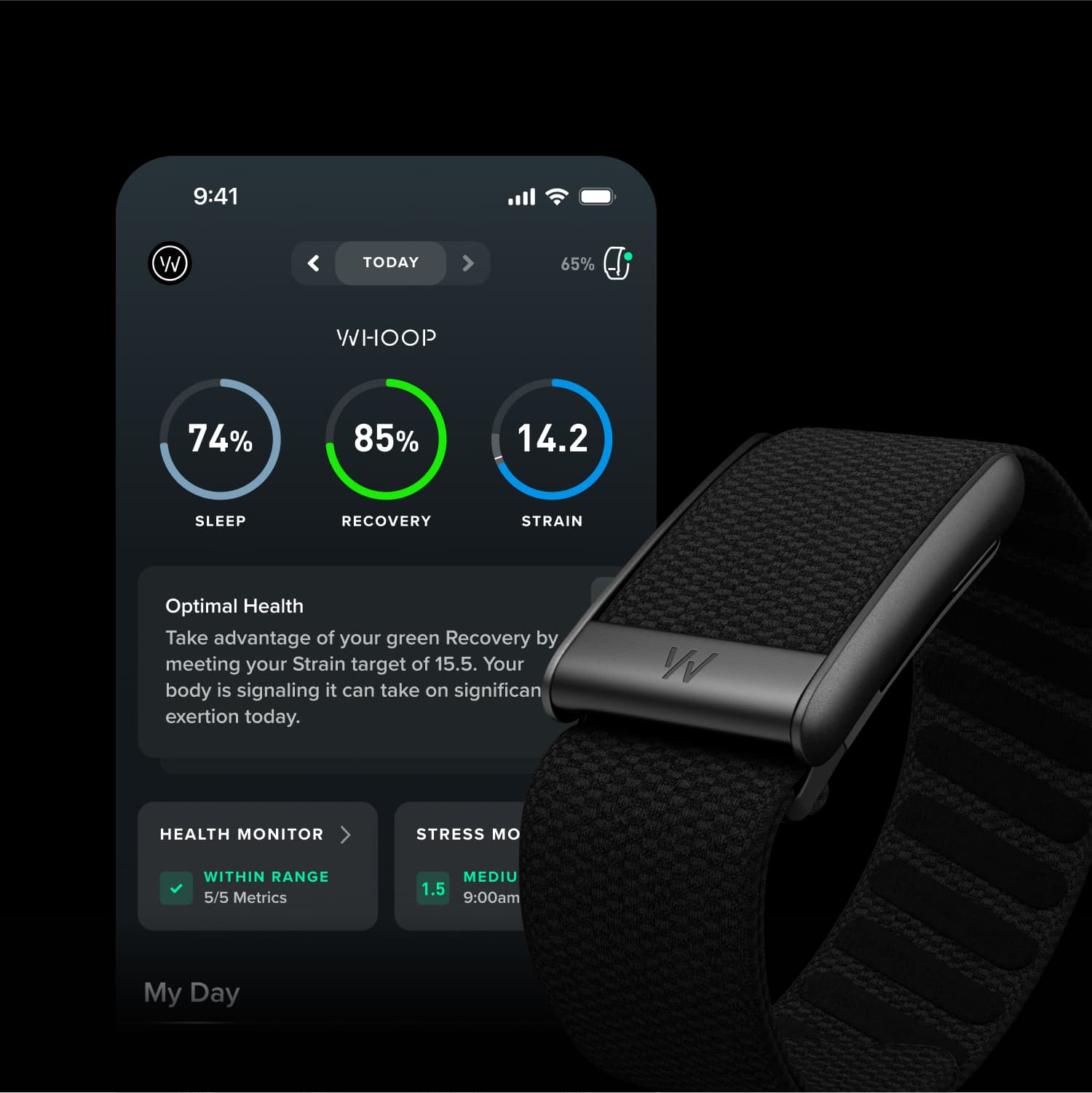
WHOOP
A screen-free fitness and health wearable focused on recovery, strain, sleep and long-term performance insights through a subscription-based membership.
Best forContinuous recovery, sleep and strain tracking
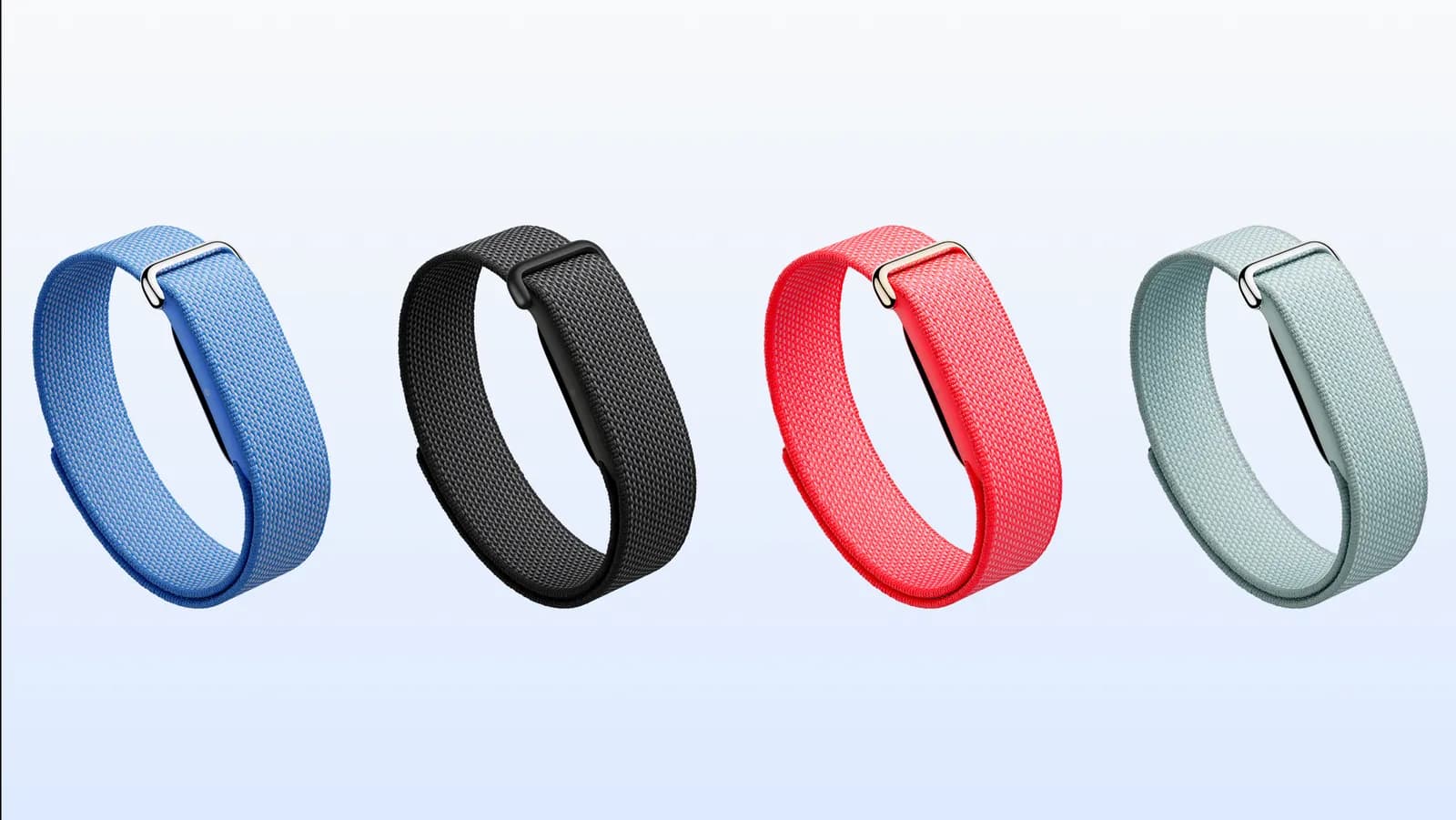
Google Fitbit Air
Google's smallest screenless tracker: a $99.99 band that monitors heart rate, sleep and SpO2 around the clock through the Google Health app.
Best forLow-cost round-the-clock health and sleep tracking
Quick answer
Choose WHOOP if
- You want recovery, sleep and strain scores every day rather than a watch face
- You would rather not have a screen or notifications on your wrist
- You train regularly and will act on daily recovery guidance
- You want longer-term health context such as Healthspan and heart-health features
- A yearly membership that includes the hardware suits you better than buying a device outright
Choose Google Fitbit Air if
- You want continuous health tracking without a screen or notifications
- You would rather buy a device once than pay a yearly membership
- Sleep tracking matters and you want something light enough to forget overnight
- You want heart rhythm, SpO2 and HRV data at an entry-level price
- You already use Android or iOS and are happy inside the Google Health app
At a glance
| Criterion | WHOOP | Google Fitbit Air |
|---|---|---|
| Best for | Continuous recovery, sleep and strain tracking | Low-cost round-the-clock health and sleep tracking |
| Pricing | Yearly membership from $199/yr; device included | One-off purchase from $99.99 |
| Trial | 1-month free trial of Peak with a certified pre-owned WHOOP 5.0 | 3 months of Google Health Premium included |
| Platform | Wearable + iOS and Android app | Google Health app on Android 11+ and iOS 16.4+ |
| Key differentiator | Screen-free band sold as a membership, focused on recovery and long-term health metrics | Screenless tracker bought outright at $99.99, with no subscription needed for the device itself |
| Category | Wearables | Wearables |
Key facts
| Fact | WHOOP | Google Fitbit Air |
|---|---|---|
| Price | Membership from $199/yr | $99.99 |
| Battery life | 14+ days | Up to 1 week |
| Display | None — screen-free band | None — screenless band |
| Water resistance | IP68, up to 10 m | 50 m |
| Platform | iOS and Android app | Android 11+ and iOS 16.4+ |
| Fast charging | — | A full day of power in 5 minutes |
| Health metrics | — | Heart rate, Afib alerts, SpO2, HRV, sleep stages |
| Premium | — | 3-month trial, then $9.99/mo |
Overview WHOOP and Google Fitbit Air arrive at the same idea from opposite directions. Neither has a screen, both are worn 24/7, and both send everything to a phone app. But WHOOP is sold as a membership that bundles the hardware and is organised around recovery and training, while Fitbit Air is a cheap device you own outright that concentrates on continuous health and sleep tracking. The right one depends far more on how you want to pay and what you want the data for than on the bands themselves. Price and ownership model WHOOP has no separate hardware price. Membership starts at $199/yr for WHOOP One and includes the device; Peak is $239/yr and Life is $359/yr, with Life shipping the WHOOP MG instead of the WHOOP 5.0. Stop paying and the service stops. Fitbit Air costs $99.99 once, with a Special Edition at $129.99, and the tracker keeps working with no subscription at all. The catch sits on the software side: Google Health Premium is included for three months, then renews at $9.99/mo, and Premium is what unlocks Google Health Coach. Over a year, a Fitbit Air plus continuous Premium lands close to WHOOP One; a Fitbit Air without Premium does not. Screen and interaction Neither device has a display. WHOOP calls this zero distractions, Fitbit Air is described as screenless by design, and in both cases you read the data in the app rather than on your wrist. Fitbit Air carries a small status light; WHOOP has none. If you want the time, notifications or live workout stats on your arm, neither of these is the product to buy. Recovery and training guidance This is the clearest split. WHOOP is organised around Recovery, Strain and Sleep scores, with Strain measured across the whole day and more than 145 supported activities, and the daily Recovery figure is what the system expects you to plan around. Fitbit Air tracks activity and will detect and log common workouts automatically, but the interpretive layer — Google Health Coach — requires a Premium subscription. If daily training guidance is the reason you are buying, WHOOP includes it and Fitbit Air charges for it. Sleep tracking Both treat sleep as central and both are light enough to wear overnight. WHOOP scores sleep on quality rather than duration alone and links it to the next day's Recovery. Fitbit Air records sleep stages and duration, and Google positions it explicitly as a sleep device, even suggesting a Pixel Watch by day and Fitbit Air by night. For sleep alone, Fitbit Air gets you there for a fraction of the cost. Health metrics The sensor lists overlap more than the prices suggest. Fitbit Air covers 24/7 heart rate, heart rhythm monitoring with Afib alerts, SpO2, resting heart rate, heart rate variability, and sleep stages. WHOOP covers continuous heart rate, strain, recovery and sleep on every tier, and reserves its deeper health features for the upper ones: Healthspan with WHOOP Age on Peak and above, and Blood Pressure Insights, the Heart Screener with ECG and on-demand AFib detection only on Life at $359/yr. So Afib-related monitoring is an entry-level feature on Fitbit Air and a top-tier one on WHOOP. Both companies state these are wellness features rather than medical devices, both restrict them by age, and both note they are not available in every country. Battery and charging WHOOP states 14+ days per charge and charges through a Wireless PowerPack that slides onto the band, so the device never comes off. Fitbit Air is quoted at up to a week, with fast charging that returns a full day of power in five minutes. Google is explicit that its figure is approximate and was measured on pre-production hardware. WHOOP lasts roughly twice as long between charges; Fitbit Air recovers faster when you forget. Apps and ecosystem WHOOP runs its own app on iOS and Android and is self-contained. Fitbit Air requires a Google Account and the Google Health app, and works with Android 11 or higher and iOS 16.4 or higher. That matters in two directions: Fitbit Air slots into Google's wider health ecosystem if you are already in it, and ties your health data to a Google Account if you would rather it did not. Water and durability WHOOP is rated IP68 and stated as water resistant to 10 meters. Google lists Fitbit Air as water-resistant to 50 meters. Both are fine for showering and swimming; the figures differ in headroom, not in everyday use. Which type of user each may suit WHOOP may suit someone who trains consistently, wants a daily read on recovery to plan around, and would rather pay once a year for hardware and software together than assemble them. Fitbit Air may suit someone who wants continuous health and sleep data at the lowest sensible cost, is happy to own the device outright, and either does not need the coaching layer or is content to pay for it separately. Important considerations Prices, tiers and feature availability change, and several health features on both devices are limited by region or age. The figures here were checked against each company's own pages on the research date at the top of this pack. Confirm the current terms with WHOOP and Google before buying, particularly if one specific health feature is the reason you are choosing between them.