Samsung Galaxy S26 vs Samsung Galaxy S26 Ultra
$400 separates a 167 g Galaxy from a 214 g one: four rear cameras rather than three, two telephoto lenses rather than one, a 6.9-inch QHD+ screen and an S Pen in the body.
The short version
| Criterion | Samsung Galaxy S26 | Samsung Galaxy S26 Ultra |
|---|---|---|
| Price | From $999.99 | From $1,399.99 (256GB); $1,599.99 at 512GB; $1,999.99 at 1TB |
| Display | 6.3-inch FHD+ Dynamic AMOLED 2X, 120Hz adaptive refresh rate (1-120Hz), Vision Booster; 2600 nits peak brightness | 6.9-inch QHD+ Dynamic AMOLED 2X, 120Hz adaptive refresh rate (1-120Hz), Vision Booster; 2600 nits peak brightness |
| Camera system | 50MP Wide (F1.8, 2x optical-quality zoom), 12MP Ultra Wide (F2.2), 10MP Telephoto (F2.4, 3x optical zoom); 12MP front camera (F2.2) | 200MP Wide (F1.4, 2x optical-quality zoom), 50MP Ultra Wide (F1.9), 50MP Telephoto (F2.9, 5x optical and 10x optical-quality zoom), 10MP Telephoto (F2.4, 3x opt |
| Battery life | Video playback up to 30 hours; 4,300 mAh typical capacity (rated minimum 4,175 mAh) | Video playback up to 31 hours; 5,000 mAh typical capacity |
| Size and weight | 149.6 mm tall x 71.7 wide x 7.2 deep; 167 g | 163.6 mm tall x 78.1 wide x 7.9 deep; 214 g |
| Storage | 256GB and 512GB, both with 12GB of memory | 256GB and 512GB with 12GB of memory; 1TB with 16GB of memory |
Which one fits
Consider Samsung Galaxy S26 if
- You want a Galaxy at $999.99 to start
- You want a phone 149.6 mm tall and 7.2 mm thick
- You want a 6.3-inch screen in a 167 g body
Consider Samsung Galaxy S26 Ultra if
- You want two separate telephoto lenses
- You write or sketch on your phone — the S Pen is built into the body
- You read or type on your phone in public and want the Privacy Display
Main tradeoffs
- $999.99 to start, 167 g in a body 149.6 mm tall and 7.2 mm thick, and the same seven-year security commitmenta 6.3-inch FHD+ screen rather than 6.9-inch QHD+, three rear cameras with one telephoto, and 512GB as the ceiling
- An S Pen in the body, two telephoto lenses among four rear cameras, a 6.9-inch QHD+ screen and a 1TB tier$1,399.99 to start, 214 g, and a body 163.6 mm tall and 7.9 mm thick
At a glance
| Criterion | Samsung Galaxy S26 | Samsung Galaxy S26 Ultra |
|---|---|---|
| Best for | People who want a compact Android phone with an optical telephoto and a published update commitment, rather than a 6.9-inch flagship | People who want optical zoom at two focal lengths and write on the screen, and are comfortable carrying a 6.9-inch, 214 |
| Pricing | From $999.99 | From $1,399.99; up to $1,999.99 at 1TB |
| Platform | Android 16 with One UI 8.5; Samsung states seven years of security updates | Android 16 with One UI 8.5; Samsung states seven years of security updates |
| Key differentiator | A 167 g, 149.6 mm body with a 3x optical telephoto and seven years of security updates stated by Samsung | A built-in S Pen and two telephoto lenses — 3x and 5x optical — alongside a Privacy Display that dims the screen to anyone looking from the side |
| Category | Phones | Phones |
Key facts
| Fact | Samsung Galaxy S26 | Samsung Galaxy S26 Ultra |
|---|---|---|
| Price | From $999.99 | From $1,399.99 (256GB); $1,599.99 at 512GB; $1,999.99 at 1TB |
| Display | 6.3-inch FHD+ Dynamic AMOLED 2X, 120Hz adaptive refresh rate (1-120Hz), Vision Booster; 2600 nits peak brightness | 6.9-inch QHD+ Dynamic AMOLED 2X, 120Hz adaptive refresh rate (1-120Hz), Vision Booster; 2600 nits peak brightness |
| Battery life | Video playback up to 30 hours; 4,300 mAh typical capacity (rated minimum 4,175 mAh) | Video playback up to 31 hours; 5,000 mAh typical capacity |
| Chip | Snapdragon 8 Elite Gen 5 for Galaxy or Exynos 2600; Samsung states the type varies by device and market | Snapdragon 8 Elite Gen 5 for Galaxy |
| Camera system | 50MP Wide (F1.8, 2x optical-quality zoom), 12MP Ultra Wide (F2.2), 10MP Telephoto (F2.4, 3x optical zoom); 12MP front camera (F2.2) | 200MP Wide (F1.4, 2x optical-quality zoom), 50MP Ultra Wide (F1.9), 50MP Telephoto (F2.9, 5x optical and 10x optical-quality zoom), 10MP Telephoto (F2.4, 3x opt |
| Operating system | Android 16 with One UI 8.5 | Android 16 with One UI 8.5 |
| Charging | Up to 55% in around 30 minutes with a 25W adapter and a 3A USB-C cable; Fast Wireless Charging 2.0; Wireless PowerShare | Up to 75% in around 30 minutes with a 60W adapter; Super Fast Wireless Charging; Wireless PowerShare |
| Size and weight | 149.6 mm tall x 71.7 wide x 7.2 deep; 167 g | 163.6 mm tall x 78.1 wide x 7.9 deep; 214 g |
| Storage | 256GB and 512GB, both with 12GB of memory | 256GB and 512GB with 12GB of memory; 1TB with 16GB of memory |
| Software support | Seven years of security updates | Seven years of security updates |
| Water resistance | IP68 dust and water resistance | IP68, to a maximum depth of 1.5 metres for up to 30 minutes |
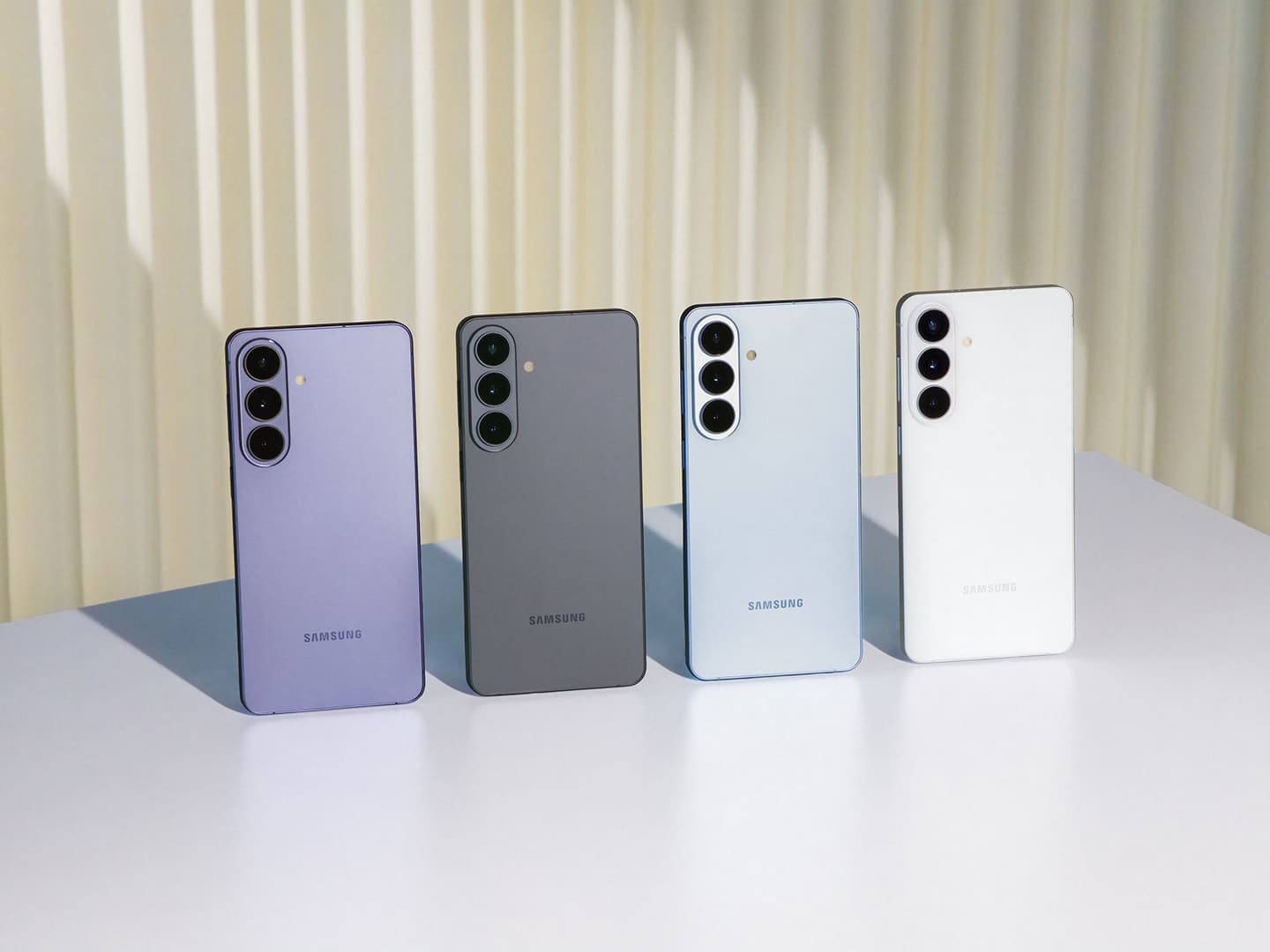
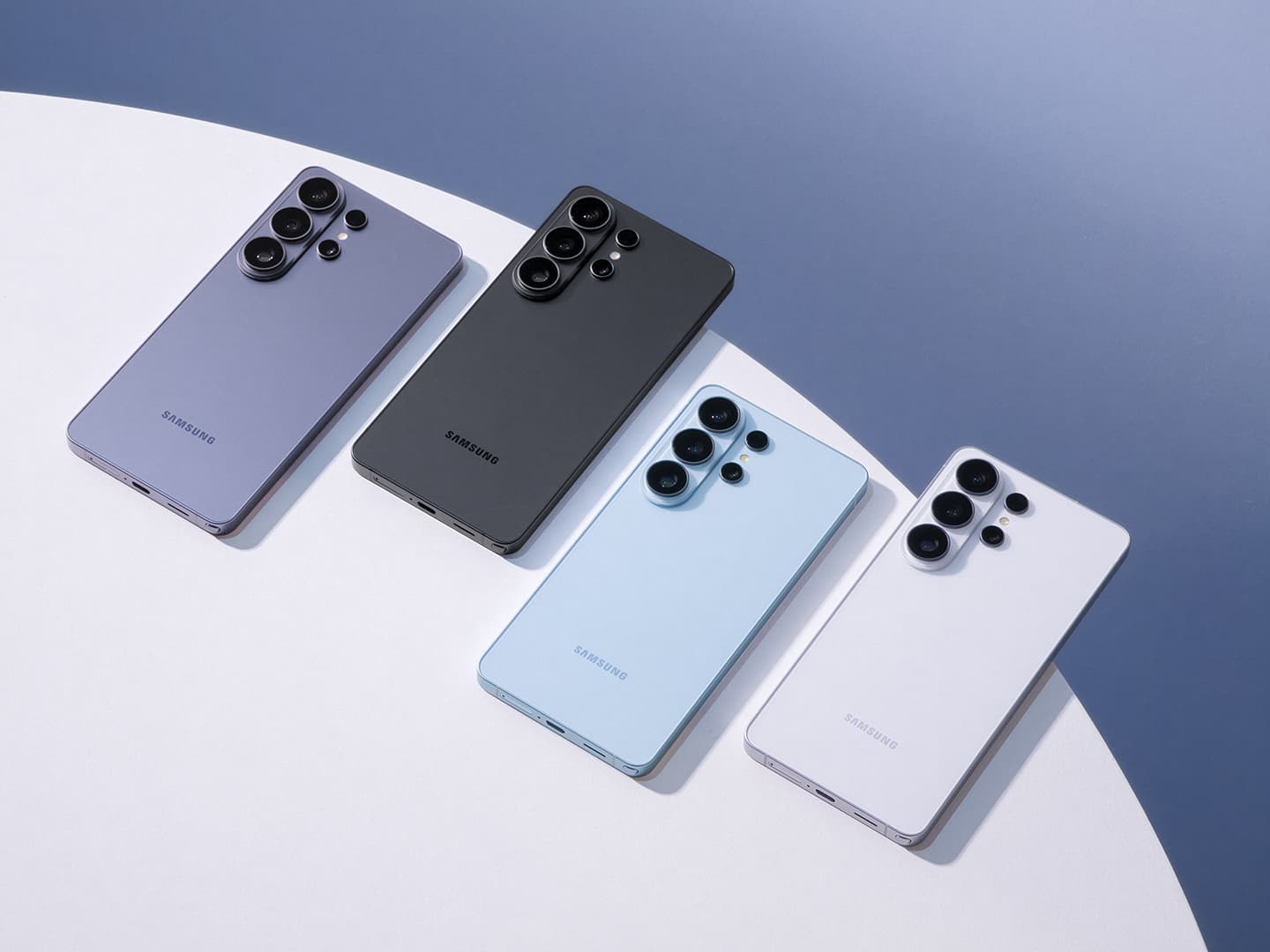
The two ends of one line-up, $400 apart. The S26 is 149.6 mm tall and weighs 167 g. The Ultra is 163.6 mm and 214 g, with a 6.9-inch QHD+ screen, a fourth rear camera, a second telephoto lens and an S Pen in the body. Android, the update window and IP68 are the same on both.
Overview
Samsung sells these at opposite ends of the same generation, and the shared parts are easy to list: Android 16 with One UI 8.5, seven years of security updates, IP68, Wireless PowerShare, the same 120Hz adaptive refresh behaviour and the same 2600 nits of peak brightness. What $400 changes is how big the phone is, how much of it is camera, how much storage you can buy, and whether there is a stylus inside it.
Key differences
$999.99 against $1,399.99. A 6.3-inch FHD+ screen against a 6.9-inch QHD+ one. Three rear cameras with one telephoto against four with two. 167 g against 214. A 512GB ceiling against 1TB. And a built-in S Pen on one of the two.
Price
$999.99 for the Galaxy S26 and $1,399.99 for the S26 Ultra at 256GB, which are Samsung's list prices. Both were discounted when this page was written — Samsung's own grid showed the S26 at $899.99 with "Save $100.00" against it — and a saving taken off a list price is not a change in what the phone costs. Above the entry tier the Ultra runs $1,599.99 at 512GB and $1,999.99 at 1TB; the S26 stops at 512GB.
Size and weight
149.6 mm tall, 71.7 wide and 7.2 deep at 167 g, against 163.6 tall, 78.1 wide and 7.9 deep at 214 g. That is 14 mm of height, 6.4 mm of width, 0.7 mm of thickness and 47 g — about 28% more phone to hold. This is the difference you feel before you notice any of the others, and it runs in both directions: one of these fits a hand and a pocket that the other does not, and one of them gives you a screen the other cannot.
The display
Both panels are Dynamic AMOLED 2X with Vision Booster, both run an adaptive refresh rate from 1 to 120Hz, and both peak at 2600 nits. Two things differ: the size, 6.3 inches against 6.9, and the resolution class Samsung publishes, FHD+ against QHD+. Samsung does not state a pixel count for either on the pages we use, so what can be said is the diagonal and the class, not a pixel-for-pixel comparison.
Cameras
The Galaxy S26 has three rear cameras: a 50MP wide with a 2x optical-quality zoom, a 12MP ultra wide, and a 10MP telephoto at 3x optical. The Ultra has four: a 200MP wide, a 50MP ultra wide, a 50MP telephoto at 5x optical with a 10x optical-quality zoom, and a second 10MP telephoto at 3x. The structural difference is the second telephoto — the Ultra reaches two optical focal lengths where the S26 reaches one, and the longer of the two is 5x. Megapixel counts are not image quality and Samsung publishes nothing you could read as a comparison of the pictures, so this is a difference in reach and in how many lenses are pointed at it.
Battery
This is one of the few battery comparisons on the site where both numbers came from the same company running the same test. Samsung quotes up to 30 hours of video playback for the S26 and up to 31 for the Ultra, behind capacities of 4,300 mAh and 5,000. Worth reading twice: 700 mAh more cell produces one more hour on Samsung's own measurement, because the Ultra is also driving a larger, higher-resolution screen. Capacity is not runtime, and here is a case where the gap between the two is visible in the maker's own figures.
Storage
256GB and 512GB on the S26, both with 12GB of memory. The Ultra adds a 1TB tier and pairs it with 16GB. If 512GB is enough, this costs nothing; if it is not, only one of the two can answer.
The S Pen
Samsung's own FAQ for the Galaxy S26 Ultra asks whether it has a built-in S Pen and answers yes. Samsung publishes no S Pen for the Galaxy S26, and every mention of the stylus on the S26's page refers to the Ultra. If you write or sketch on a phone, this is a difference no specification elsewhere on the page compensates for, and it is the clearest reason to pay the $400 that has nothing to do with size.
The chip, and why it is not in the table
The Ultra runs the Snapdragon 8 Elite Gen 5 for Galaxy. The S26's entry reads "Snapdragon 8 Elite Gen 5 for Galaxy or Exynos 2600", with Samsung stating that the type varies by device and market. So the two are not two different chips, and they are not reliably the same one either: the Ultra's silicon is known and the S26's depends on where you buy it. There is no honest row to write for that, and no benchmark Samsung publishes that would order them, so it is here in words instead.
Charging
Both quote a figure at thirty minutes and the figures are not comparable, because the adapters are not the same. The S26 reaches up to 55% in around 30 minutes with a 25W adapter; the Ultra reaches up to 75% in around 30 minutes with a 60W one. The real difference is what each phone will accept — 25W against 60W — rather than a race one of them wins.
What is the same on both
Android 16 with One UI 8.5. Seven years of security updates, stated by Samsung for each. IP68. Wireless PowerShare. An adaptive refresh rate from 1 to 120Hz and 2600 nits of peak brightness on a Dynamic AMOLED 2X panel. If any of those is what you are deciding on, the two phones are the same purchase.
Which one may fit you better
Consider the Galaxy S26 if $999.99 is the number that works, if you want a phone 149.6 mm tall and 7.2 mm thick, or if 167 g is as much as you want to carry. Consider the S26 Ultra if you want two optical telephoto lenses rather than one, if you write or sketch with a stylus the phone keeps for you, or if you want a 1TB tier.
Important considerations
The 47 g and 14 mm are the difference most people will notice daily, and no camera makes a phone fit a pocket it does not fit. The S Pen is the one capability present on one phone and absent on the other, rather than larger on one than the other. And the chip is genuinely unsettled on the S26, so if the exact silicon matters to you, check what is sold in your market before ordering.